How To Structural Fiction: A Workable Plot

I don’t know how many writers or would-be-writers I have here, but I’m going to pass on a very simple lesson that I learned from the late, great Algis Budrys at Writers Of The Future. Because while hardly any new writers need “an idea” as earlier discussed, many need to know what to do with that idea. So here is a plot structure that intrinsically works:
Ingredients:
At least one protagonist.
At least one problem (and this is important) solvable by the protagonist!

Step 1: The protagonist encounters the problem. This is generally your hook. If this is a long-standing problem (like, say, the protagonist has a terminally-ill child and has had for years) then the problem must become immediate.

Step 2: The protagonist attempts to solve the problem using a reasonable amount of intelligence and the resources available.

Step 3: The protagonist fails. Ideally, the protagonist fails in a way that costs him something, or makes the situation worse, or reveals something to her about the nature of the problem.

Step 4: The protagonist attempts to solve the problem using what he has learned the first time to bring more resources to bear.

Step 5: She fails again, more severely or learning more.

Step 6: The crisis is now imminent. The character is out of some resource (this may include time) necessary to solve the problem. She throws everything valuable to her at solving the problem, knowing there will be no other chances.

Step 7: The character triumphs against great odds. Or, if the story is a tragedy, she may fail. Note that the character losing his life does not necessarily count as failure.

This formula gets you a functional story.

At this point, some objections may occur to you, such as:

That’s not the only way to write a story!

You are right. I never said it was.

Fiction is more than a formula!

Of course it is. And people are more than skeletons. Nevertheless, people work very BADLY without skeletons, or with incomplete or damaged skeletons.

Wouldn’t that make all stories the same?

Again, only in the sense that having practically the same skeleton as most other people means that YOU are qualitatively “the same” as all other people. In other words, not at all.

In any case, that concludes the brief lesson. For many of you, it won’t be necessary, but it was valuable to me when I read it, and in that spirit, I pass it on.

Fiction Update: What’s New In My Worlds

I am interrupting your regularly scheduled blog today to bring you news of new and awesome publications!

It’s been kind of a slow year so far for new fiction. I find that frustrating because there’s a whole lot behind the scenes that is in the process of happening, (more on that below) but very little that has actually happened. This means that there’s not a lot new for my readers to read.

So, what I’m doing over on my Patreon Page is I’m launching a new kind of story, a sort of series of humorous vignettes, called “Signs From A Generation Ship.” And we all know the problem: You launch a huge ship across the horrifying void of space on a journey of 1000 years, hoping that your great-great-great-great-ad absurdum-grandkids will get there, but how do you stop them from forgetting they’re on a ship and blowing themselves up when they, I don’t know, try to free God from the fusion reactor, or look for supplies on the other side of that big, sealed double door? What kind of warnings do you post? Here’s a snippet:

Publication BDCH4135M

Location: Helm Station (embedded in the padding, back of helmsman’s chair)

Title: Welcome To The Control Room!

Hello! Judging by the fact that you are ripping apart the chairs, we must assume that you may be the first person(s) to visit the Control Room (or “Bridge”) for quite some time, possibly even for generations. We hope you are literate. If so, please locate a copy of Publication AA1: Your World Is A Ship, hopefully still available in many cabins and public spaces. If you are semi-literate, TAKE BOOK TO READER. DO NOT BURN FOR WARMTH. If not, the flashing red button will play this message in an audio file unless you press it.

This recording is not the voice of a ghost or an evil spirit. It was hidden by your ancestors in case a mutiny or other disaster caused your people to forget their origins. For a detailed description of these origins, please refer to the aforementioned Publication AA1.

In the meantime, the machines surrounding you are very complicated and vital to maintaining your life and that of your children for the foreseeable future, which is why it is so important that you DO NOT TOUCH ANY OF THE BUTTONS OR DISTURB ANY MORE OF THE ARTIFACTS IN THIS ROOM. SERIOUSLY, LEAVE EVERYTHING IN THIS ROOM ALONE! IF YOU TOUCH ANYTHING IN THIS ROOM YOU MAY CONDEMN EVERYTHING YOU KNOW AND LOVE TO A HIDEOUS AND PAINFUL DEATH.

To discover whether you or others before you have already condemned everything you know and love to a hideous and painful death, please complete the following steps:

1) Look at the Astrogation Station. That is the panel with three large screens on it.

2) On the upper small screen, there is a gold circle projected. If there is a star glowing within the circle, please leave the Control Room immediately, barricade it with severe warnings and guard it with your lives until the Voice Of Arrival Protocol instructs you or your descendants what to do. Guard it with your lives.

3) If there is no star in the circle, continue to disassemble this chair. Ignore the pamphlet buried in the column. Flip open the transparent cover and press the large, red button.

4) Use the countdown to pray to whatever God(s) your people revere.

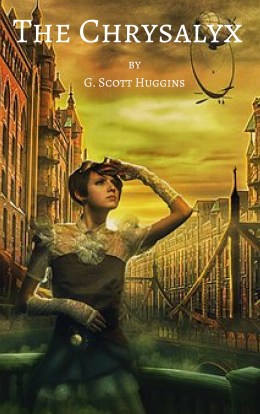
This story will update Monday, Wednesday and Friday on my Patreon until I run out of signs, and is yours for the low price of $1.00 per month. Additionally, you will receive my novelette, The Chrysalyx, a tale of steampunk intrigue in the alternate 1920s, downloadable as a .mobi file.

Chrysalyx Cover Done

So, what’s in the process of happening? Well, what’s coming up is…

  • “All The Colors Of The Darkness,” the story of a girl blinded to keep her from developing her natural talents as a witch, will be appearing sometime this year from Lethe Press in their Survivor anthology.
  • “Crying By Remote Control,” the story of a woman who must use prosthetic emotions, has just been accepted to the anthology Mind Candy 2.
  • On The Wings Of The Morning, an anthology of my no-longer-easily-available work will be coming from Digital Fiction later this year.

Also, the novel I’m working for at Digital Fiction is nearly halfway done.

So that’s it. Please support me on Patreon; I’ll make it worth your while.


Is It Just Me, Or Is THE EXPANSE What’s Between Julie Mao’s Ears?

If you’re currently watching Seasons 1 and 2 of THE EXPANSE or plan to do so in the future, please be aware there be spoilers here.

Okay, so first off, I really do like THE EXPANSE. It’s a fine show, with great interplanetary sci-fi action, and wonderful acting. I haven’t gotten around to starting Season 3, yet, but that is a question of time, which is in very short supply right now.

But I have to ask, am I the only person who thinks that Julie Mao was a complete idiot? I mean, the character herself is understandable, and is a great example of overused-trope-done-well. She’s a spoiled child of privilege who decides that the pathway to righteousness and holiness is to wreck Evil Daddy’s stuff. She’s determined to become the White savior (Asian savior, yeah, I know, but the principle is the same, and that sort of thing seems to have shifted a bit in the intervening 200 years) of the downtrodden Belters. So far, she’s not really different from today’s trickle of rich white kids who decide to go join ISIS or a leftist terrorist group because Mommy and Daddy didn’t fulfill them enough and there’s poor people and this proves that AMERIKKKA IS TEH EVILZ!!

But Julie outguns these poor saps because she knows that her Daddy is actually screwing around with something that’s apparently a fusion of nuclear weapons, killer AI and zombie virus, so she decides to arrange to steal it. And apparently is utterly unconcerned that she might be playing with something she barely comprehends, is incapable of controlling, and might cause literally billions of deaths if she screws up.

Hmm. Is it an accident that Julie’s name is “Mao?”

And then of course, like so many in her actual situation, is shocked to discover that she and her friends are actually the low-level bottom feeders of politics rather than an unstoppable revolutionary force, and that she has been outthought and played, all of which leads to her death and the deaths of — “revolutionaries” take note — thousands of people, almost all of whom are the very “downtrodden Belters” she was trying to “save.”

I’m sure the people of Eros were very grateful to her.

In the end, Julie Mao reminds me of no one so much as Osama bin Laden. All for the cause, kumrads! And it matters not how many we kill, because our ideology is pure!

Or am I missing something?

Honestly, I can forgive Julie Mao because she does come to a pretty bad end, and the character of the detective who falls in love with her because she represents to him a willingness to fight for what he’s given up on is compelling. I’m honestly not certain whether the writers wanted us to see irony in Julie Mao or whether they were in earnest. Hell, maybe I AM missing something. Thoughts?

How To Tell If You Are In Literary Magical Realism

Firstly, you will notice that something amazing has happened. Not just to you, because then you might simply be insane. And this will not do for magical realism, where everyone must be insane. Or behave like it. No, it must be something incredibly amazing that happens to everyone, like everyone sprouting butterfly wings, or water squirting on people whenever they have bacon and eggs for breakfast or something. Except people don’t eat bacon in magic realism because awareness. Soy.

Secondly, under no circumstances must anyone change their behavior because of this. No one will wear rain slickers when they have soy and eggs. There will be no widespread disuse of bicycles or running shoes because people take up flying.

Thirdly, whatever has happened, it is only really important to one person. Your character. And it will open up his or her or their soul, because this is the person the universe rotates around, and has changed itself to illuminate their one specific problem that is extremely important that no one has ever had to deal with before. Like finding fulfillment. Or falling in love.

Third-and-a-halfly, your character must studiously ignore any larger implications of something amazing, and only ask things like, Grandma, do your wings ever catch on your clothing. And not use quotation marks because decentering spoken discourse challenges the patriarchy or capitalism or something and is really important, okay?
Okay.
Were you talking there?
Who can tell?

Fourthly, The End

Seventhly, make sure there is no resolution of anything.

Sixthly, play with narrative conventions, such as chronological order, making clear you won’t be bound by them or sentence structure grammar because freedom, I mean liberation

Am I In An Epic Fantasy? A Guide

This is the kind of thing that my Patreon supporters get periodically!

This Guide Will Help You Determine Whether You are In An Epic Fantasy.

What kind of person am I?

You are young and single.
Where do I live?
In a small, unregarded village, hundreds of miles from anywhere important.
What’s my job?
Apprentice something-or-other. Or nothing, really.
Who are my parents?
Dead.
What? No, they’re not. I live in their house!
That’s what you think. Be prepared for a big revelation, soon.
How soon?
As soon as the Village Elders talk to you.
What? Why would they talk to me?
It has to do with the mysterious sheep-killings and dark strangers we’ve been seeing about these parts lately.
Yeah, what’s up with those?
And about that mysterious amulet you always wear.
I always wondered about that. Where did that come from?
We never talk about that.
Dammit! That’s what my “dad” always said when I asked.
And you were never suspicious that your parents always referred to themselves in quotation marks?
Dammit. What do I look like?
Like an absolutely typical person in your village, possibly with an atypical (pick one):
Hair color
Eye color
Birthmark
Minor physical defect that in NO WAY detracts from your attractiveness
Do I have a religion?

Yes, but God or the gods, or the Whatever doesn’t really ask a lot of you, or have any commands, or do much at all, except for facilitate Ancient Prophecies that totally have absolutely nothing to do with you or anyone you know (wink, wink!) and that no one actually reads apart from Mysterious Strangers that appear out of nowhere.

Excuse me, but there’s a knock at the door.

Don’t hurry back.

Just For the Joy: The LEGO Movie

Yesterday, I got to have a lot of fun. I pooled a little of my own private blow money together with the money my son has been faithfully saving, and went on e-Bay and found a copy of Benny’s Spaceship Spaceship SPACESHIP! from the LEGO Movie. It arrived yesterday, and we spent the afternoon putting it together. What I learned from this:

1) It’s incredibly refreshing sometimes to go back and do something you really enjoyed as a kid, with your kid.
2) That’s the biggest LEGO set I ever put together.
3) Damn, but I’d forgotten how sore putting together LEGOs for hours can make your fingers.
4) Like the movie itself, this kit was more fun than I thought it would be. The designers did far more than they had to, apparently for the sheer joy of it, and including features that were not obviously included in the movie. Variable-geometry wings, pop-out concealed missile-launchers, drone robot/fighters, detachable auxiliary attack sleds, and a detailed engine room complete with something that resembles a Star Trek antimatter warp core.

The LEGO Movie goes in my personal bank of Movies That Were Better Than They Deserved To Be. I mean, usually when people make movies based on games or toys, it’s because they are out of ideas and are desperate for cash and you get the load of crap you expect: Resident Evil. Transformers. Doom. Battleship.

But then, every once in awhile, you get Clue. A script written by someone who wasn’t told and didn’t care that it was supposed to be a potboiler, who just decided to have as much fun as possible by unleashing a wicked sense of humor while no one was looking.

I would argue that The LEGO Movie fits in the same category. The writers did an amazing job of synthesizing dialogue and jokes that would entertain both kids and adults, much as LEGOs themselves can, in the finest tradition of the old Bugs Bunny cartoons, and folded it through a classic Hero’s Journey story that was all about rescuing the Legos from, essentially, an Empire Of No Fun. And no, it wasn’t about anticapitalism: it was about a little kid who isn’t old enough to see his father’s obsession with work as an adult necessity yet. Lord Business is evil (or evil is Lord Business) simply because Business (busyness) is what his Dad does. All he can see is that his dad has transformed even his hobbies into work. Which frankly is a reminder that adults need from time to time.  

It was fun. I had fun. Sometimes, that’s the accomplishment you need to strive for.

Good Friday Post: The Future Of Faith

This is probably going to be a rambling post, because I have to admit that I haven’t planned it. It just occurred to me that I might want to write something about faith in SF on the day that we Christians remember the death of our Lord.

It is a very common trope, about which I have written before, that atheists and agnostics commonly portray religion as a thing of the past, if they bother to do so at all. And we must not, of course, blame them for so doing. If they honestly believe that faith is no more than superstition, the fanciful fruit of childish minds, and if they also believe that humanity is advancing (toward what, I can’t imagine), then it is reasonable to expect such religions to wither and die, in the fullness of time.

Of course, any thoughtful writer who wishes to portray such a thing would do well to remember the historical fact that religions are possibly the longest-lasting human constructs of all, far outstripping governments, and rivaled only by languages and the family. “Optimistic” atheists have been predicting the end of religion for centuries, just as “optimistic” communists have been predicting the Coming Revolution, and so far both have been as disappointed as Fundamentalist Christians who have, in defiance of our Lord’s command, been predicting His imminent return.

I wish that it were more common in SF especially that casual mentions of faith existed. One of the best examples of that I can think of offhand is the role the Church plays in Niven and Pournelle’s Empire of Man as portrayed on The Mote In God’s Eye. It doesn’t play a huge role in the novel, but MacArthur has a chaplain, a service is held on Sunday, and it’s revealed that the Empire, like many historical kingdoms, is officially Christian, though there doesn’t seem to be any persecution of non-Christians.

Also well done is the Commonwealth Church that Alan Dean Foster came up with. It’s very much not Christian, and welcomes members of all faiths or none, but obviously, if we project faith into the future, it would be just as unrealistic to expect or portray only Christian faith as it would be to portray none at all. What’s saddening is that Foster and Niven/Pournelle’s work seems so alone in this assumption that faith will continue to exist when it seems to be the most reasonable assumption.

I’d be interested in a discussion about what makes this so difficult, but my guess is that since religion is so bound up in emotion, most writers simply don’t want to open themselves to potential attacks.

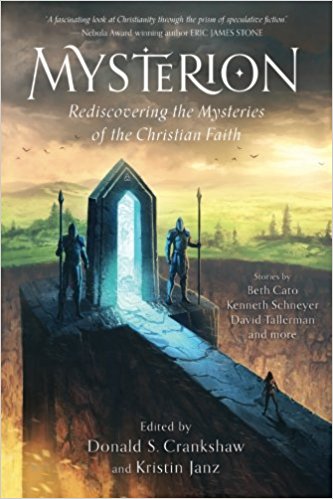
By the way, my story of Christianity in the future, which attracted several wonderful reviews, as well as being in the company of many award-nominated stories, can be found here:

Mysterion

The Importance Of Rejecting Rejection

There is another set of lessons that I learned from my virtual mentor, Steven Barnes, which has been very valuable to me. Essentially, they go like this:

1) Always send a piece out ten times before you consider revising it.

2) Before taking advice about revising a piece, it has to come from two people. One of those people can be you.

These are very important rules. Why?

You’re going to get advice from beta readers, and as you get more practiced at writing, you will get more comments from editors about why your story was rejected. Mostly, you’ll still get form rejections about “this wasn’t right for us,” but if you got advice from every market, you would get a mess of contradictions. I have had rejection letters telling me that there was too much detail and not enough. That the character was intriguing but the plot was dull, and that the plot was exciting but the character flat.

If you tried to satisfy every objection from every editor, you would never be doing anything else, AND with the added benefit that your story would be an unreadable hash of compromises.

I remember getting a different version of this advice from a workshop instructor. He was working on an accepted piece and disputing some of the editor’s recommended changes, and finally said, in some frustration, “Have you ever had an author who took every piece of advice you gave them?”
And the editor put his head in his hands and said, “Oh, God, yes.”
Wimpy writers are bad writers, and even editors don’t really want them.

So, why ten times? Have you, Scott, ever sold a piece after ten rejections?

Yes, I have. In fact, I just got paid for one that sold on its twelfth submission. The editor who bought it loved it.

It really can feel like, and I struggle with this, too, that you are completely powerless in this business, and have to do whatever people want to make it better. Especially when you have a story you really believe is good and no one will buy it, and you’re desperate to know what’s wrong with it.

Now, yes, sometimes a reader or editor will say something about a piece and it’s like a nova goes off in your head. “YES!” says the Morgan-Freeman-like voice in your head. “THAT’S THE ANSWER!”

This voice is not nearly as magical as it sounds, but that’s why the rule says, “One of these people can be you.” Just make sure it’s really the voice of your better writer, not the voice that’s desperate to sell this stupid piece however you can.

Patience is the hardest part of this business. That’s why you need it right now.

I’m Writing A Novel And Boy, Does It Suck. Here’s Why I Don’t Care.

So those of you who have been following my blog know that I’ve been commissioned to write a novel. Briefly, it’s for the Digital Fiction Publishing League, and it’s a mystery for kids, set on a Moon colony about a hundred years in the future. Think, The Moon Is A Harsh Mistress, but without the Moon being a penal colony.

I’ve set myself the goal of cranking out at least a thousand words a day. The last two days, I met that goal. Over the past two weeks, i really haven’t, but that has a lot to do with starting a new day job. I’m about 13,000 words in, or about 20-25% of the total, and halfway through Chapter 4.

And it is terrible. And I don’t care.

Make no mistake, the last two thousand words probably represent the worst writing I’ve done in some time. So why don’t I care? I’m going to turn to one of my virtual mentors, Steven Barnes. Steven Barnes has, through his online presence, taught me an immense amount about the value of completing work. He’s also the author of at least a dozen novels, some on his own and other with Larry Niven and the late Jerry Pournelle. Basically, you learn through producing bad work, and you then have bad work that can be revised. And I’m going to revise the hell out of this chapter.

Now, a younger, less-experienced me used to think this was a terrible waste of effort. I knew revision was necessary, because it’s possible to write crap without knowing you’re writing crap. Obviously, you have to reread and revise the crap you unwittingly produced. But if you know you’re writing crap, surely the best thing to do is slow down and not write crap in the first place. That’s very tempting, and it is wrong, wrong, wrong.

The problem with that idea is that it gets you so concentrated on the minutiae of orchestrating a scene, that it inhibits the flow so necessary to the production of a coherent story. It’s as if a runner was so obsessed with perfect form that he would never run any length of race until he got every step perfect. He’d never even make it a hundred yards. More importantly, he wouldn’t be developing that perfect form in conjunction with the endurance required to win an entire race.

Another analogy might be cooking. If you obsess over getting the proportion of ingredients just right, your meal may be overcooked before you can ever mix them all together. You must move forward, imperfectly, before you can approach perfection.

Right now, I care about getting through this first draft. Then I’ll work on making it perfect, and most importantly, I will have an “it” — however awful — to perfect.

The Antitheist’s Nightmare


For Sunday, another column I wrote for SciPhi Journal, with apologies to Bertrand Russell

The eminent antitheist and essayist Dr. Brussels dreamed that he died and found himself, against all expectation, at a pair of immense gates that shone like great pearls. He was shocked and rather apprehensive as he was met by a being that looked astonishingly human, like a king, with wings twice as long as he was tall.

“I see that I must be ill and hallucinating, or having an end-of-life experience,” he said. “For nothing else could explain the anthropomorphic delusion I am currently suffering.”

“You are not ill, but you are having an ‘end-of-life experience,’ said the being. “It is called Heaven.”

“Heaven could hardly exist,” Brussels replied, “And if it did, it certainly would not look at all like a mere Human conception.”

The being smiled. “Heaven can look as It pleases, though Its reality is indeed far deeper than any one species of the Creation could fathom, at least at first. You are expected.”

“But how could I be expected in Heaven?”

“That is hardly for me to judge, man,” said the being. “I am to take you to the Eternal.” And in no very long time, he was led through the glories of the Celestial City, where, to his great surprise, Brussels found himself standing in the Presence.

“My child,” said The Eternal. “You have come at last.”

“You cannot possibly judge me. Amid all the planets of all the stars of all the galaxies of the Universe, how could you possibly know who I am, let alone presume to judge my motivations, my circumstances, and my actions?”

“My dear child,” said The Eternal. “No one has yet mentioned judgment. But you devoted your life to the study of the Universe. How is it that you do not understand what “infinite” means? How could I possibly not know all about you? Is My time limited?”

“Of course I know what ‘infinite’ means,” said Dr. Brussels. “But I can hardly be expected to have spent much time upon speculation about Your attributes. My study was the facts of the Universe that were proven, and not about Your existence, which was entirely unproven.”

The Eternal replied, “And did your studies not teach you that the Universe I created had a beginning and was likely to have an end? And surely you learned that your own life had a beginning and an end: that was much more provable. You believed that because of your small size and short life, I could not possibly take any interest in you, and yet you devoted that almost nonexistent life to the study of the lifespan of a Thing that was also limited, but merely much larger. Did you think this a wise use of the time I had granted you?”

“Well,” he sputtered, “But You did not give me adequate proof of Your existence to make me think that studying You was likely to be of value.”

“I see,” smiled the Eternal. “And the fact that the vast majority of your fellow-humans spent a great deal of time on that very endeavor suggested nothing to you?”

“It suggested only that the ignorant love ignorance, for surely even You must agree that humans agree to believe things that are manifestly untrue,” Dr. Brussels riposted.

“Of course, child. You are correct. Tell Me, what sort of evidence would you have found acceptable?”

Feeling a little surer of himself, Dr. Brussels replied, “Any sort of physical evidence of your existence.”

“So you wanted Me, a Being larger than the Universe, to appear inside it?”

“Ah, but surely You could have made Yourself smaller, if You were indeed Infinitely capable.”

“So you believe I could have made myself small enough for you to perceive, but not that I could have paid attention to you? I could indeed have done so, and have,” replied the Eternal. “But then would you not have said that my small size proved Me an impostor?”

“Well,” said Dr. Brussels, “But You could have demonstrated Your power.”

“So, I might have come to Earth, perhaps disguised as a Human, and done miraculous works?” smiled the Infinite. “Or as a pillar of smoke and flame? If only there were records of such an event available for a learned man such as yourself to peruse.”

Dr. Brussels felt himself blushing at the trap he had nearly fallen into. “Records are hardly any use to a scientist concerned with truth!” he stated. “Only that which has been proven is acceptable.”

“I see. Then surely you, Dr. Brussels, performed every experiment of Ptolemy, Copernicus, Galileo, Newton, and Einstein, not to mention others we could both name, simply to make sure they were true. I am surprised, however, that you ever had time for anything else.”

“Of course I trusted the testimony of the great experts in my field,” Dr. Brussels said.

“But you did not trust the testimony of Albertus Magnus and Paracelsus?”

“Of course not. Their methodology was flawed and their results untrustworthy.”

“Ah. So the lived experience of scientists about science was trustworthy, even to the extent of trusting them to point out the flaws of less capable scientists. But you could not trust the writings of theologians about theology because you had not shared their experiences directly, and they disagreed with one another.”

“But why,” asked Dr. Brussels, “could You not simply be with us all the time?”

“I believe you would have discovered that the answer to that question in the records to which I earlier referred. I withdrew because humans did not want My company as much as they wanted to discover truth in their own way, regardless of how harmful that could be, both to themselves and others. And now that I have withdrawn, humans ask where I Am. What would you have Me do, child?”

“You could at least, if you are so powerful, present Yourself to those who are honest and would be amenable to reason individually, so that they might have a chance of knowing you!” snapped Dr. Brussels.

“Of course, I could, child,” replied the Infinite. “And it would need to be personal, direct, and in a similar manner, so that those enlightened men you describe would know that it was from Me, and would have cause to humble themselves, and follow.”

“Yes!” cried Brussels. “So why don’t you do that?”

And he awoke in his home.

“Strange, the delusions that will overtake even the most serious and scientific minds,” he muttered.