Notes To The Author As A Young Man: How You Can Write A Novel In Three And A Half Months, And Still Have A Life.

There are many things I wish I could go back and tell my younger self about life, love, writing, and many more things. I’m going to start with this one, in the hope it may be useful to my readers. Just a year ago, I would have said that writing a novel this quickly would have been impossible for anyone but a professional, probably-childless, full-time writer. Here are the lessons I learned that made this possible. I would like to especially credit Steven Barnes and his Lifewriting philosophy for teaching me many of these things. There’s a lot more over on his Facebook group dedicated to this, some of which I have not yet put into practice, but it’s well worth checking out. I’ll designate the points I learned from him with an (L).

1) Have A Clearly Defined Motivation (L): In this case, my motivation was two-fold: 1) I had a contract promising me payment, and 2) I had another novel I really wanted to get to revising in June because a publisher asked me to. So I had to be done with this by May. Now, if I had read this a year ago, my reaction would have been something like,  Oh, all you have to do is get publishers to hand you contracts for shit you haven’t even written yet, or respond favorably to something you have? Well THAT sounds easy! Thanks for nothing, asshole!
And I would have been wrong to think that. Because what I would have been missing is that the motivation always comes from YOU. Yes, it’s AWESOME to have external motivation. But if I had decided, no bones about it, “I’m gonna self-publish this baby by the end of August” I could still have accomplished this. That decision is ENTIRELY in your control.

2) Control Your Word Count: This novel had a soft limit from the publisher of 55,000 words, and a hard limit of 60,000. This meant that I had to make absolutely sure that it didn’t balloon into an epic. At 53,000 words, it is the shortest novel I have ever written, the next shortest being about 120,000 words. Word Count MATTERS. If this had been a typical-length novel for me, I doubt it would have been finished in under six months. I can’t type that fast. Yet. So how do we control our word count? We…

3) Outline: Before I started this project, I created a thorough (about 3000 word) outline of the story, including four character sketches of the family at the center of the book. On completion of this outline, I was reasonably satisfied that I would not exceed word count. I could not allow myself any real subplots. Focus had to stay tight on the major plot from beginning to end. This meant that I could look back at the outline so that I never had the dreaded “What was going to come next” moment. Also, it was a great way to squelch rabbit trails that would inflate the word count.

4) Double Outline: Before beginning each chapter, I read the outline to make sure it would make sense, and then made further notes, including who would say what in what order. This outline would have looked like gibberish to anyone who wasn’t me. But it ensured that while I was actually writing, I got to focus on how the prose sounded, because I had already decided what to say, when.

5) Control Your Time (L): While I was writing the novel, some other things I normally do had to be put on the back burner. Short story writing, responses to calls for submissions, marketing, and, notably THIS BLOG all suffered. In fact, it’s the reason you haven’t been reading much here for the past two weeks. Working on it. It even means that blog posts have to be shorter. This, one, for example, has now taken all the time that I can give it, so I’m going to leave part two of it for tomorrow.
Story Sale: Iron Out Of Vulcan

I am pleased to announce that my short story, “Iron Out Of Vulcan” has been picked up by the anthology Battling In All Her Finery, and would direct interested folks to its Kickstarter site.

“Iron Out Of Vulcan” tells the story of an Earth utterly defeated by incorporeal alien invaders. An Earth where the only survivors are the severely disabled…

More news to follow when the book is out. Until then, enjoy the anticipation with me! And enjoy this snippet:

I rode between two drum-fed National Guard .50 caliber machine guns mounted in a plexiglass ball-turret, mounted on the back of a microbus shell welded over the bed of the six-wheel Ford F550. Again, I peered through the iron crosshairs at the black speck in the distance.

Definitely a motorcycle.

We have a friend,” I called through to the cabin. “Watch for IEDs.”

Oh, sure; I’m on it,” Mina deadpanned. But she signed to Eric, which was good enough. Paul moved forward, too. It was a standard trick. Make your target watch you, and they might miss your roadside bombs. Best way to take us out, unless they had spike-strips.

Who is it, Scout?” asked Mina. “Not Them, I take it?”

She’d be swearing more,” Eric grunted.

I don’t know,” I said. Not Them. A gang out of Chicago or Dallas, maybe. The remnant of a Mexican drug cartel, perhaps. The bandidos had tried taking Criptown from us last summer. Cost us a lot of good Crips and ammo we couldn’t spare.

Some thought we shouldn’t call the place ‘Criptown.’ Worried it might scare potential recruits off because of the old gang name. As if any of them had got out of the cities before the nukes hit.

I looked back at the cycle. We could only hope that cycle-boy’s friends would decide Vulcans weren’t worth the carnage.

I looked at the empty road ahead. Somewhere out there, a radio had called for us. Was it a trap? Some Vulcans had disappeared. Maybe this cyclist’s friends had set us up. Or maybe someone else had. Or maybe – just maybe – the signal was genuine. It was a chance we would have to take, if we could find them.

We needed people desperate enough to live free.

Protagonists: A Spotter’s Guide

Works of fiction are almost always centered around protagonists. Sometimes, however, it is difficult to tell who the protagonist is. It is possible to have multiple protagonists. One of my favorite novels, which provides a fascinating study of different kinds of protagonists, is A Civil Campaign by Lois McMaster Bujold, which I highly recommend to everyone. Although to get full enjoyment out of it, you really should read The Warrior’s Apprentice, Brothers In Arms, Memory, and Komarr  first. Do it: it’s not a bug, it’s a feature, and if you don’t like them, you have no soul.

Finished? Good.

Now, we could cheat, looking at this book, and say “anyone whose point of view we see the action through is a protagonist,” but that’s no fun, and not always accurate. For example, we see through Quentyn Martell’s POV in the Song Of Ice And Fire series, but it’s hard to argue that he rises to the level of protagonist of anything but his own story, and by that definition, every character in any book, including, say, Greedo, is a protagonist. So that’s a useless definition. However in this case it does give us our five protagonists: Miles, Ekaterin, Mark, Kareen, and Ivan.

The two pairs of lovers, Miles/Ekaterin and Kareen/Mark can give us a wonderful lesson in how to give two protagonists the same, or nearly the same, goals. Bujold does a wonderful job setting this up so that the males of the pairs have essentially the same goal: win the fair damsel. The females of the pairs also have, really the same goal, which is, become a fully-capable person. Yet the flavors of the goals are highly individual: Kareen’s is a coming-of-age story. She is a child becoming an adult. Ekaterin’s is a story of recovery: she is an adult who was scarred by emotional abuse. Both struggle to escape emotional and financial dependence.
On the male side, Miles’s drive to succeed, usually a great asset, becomes his tragic flaw: his determination to win Ekaterin leads him to deceive her dishonorably, and begin a long road to redemption. Mark, on the other hand, must overcome his self-doubt in order to take any action toward helping Kareen, so he can solve his own problem.

(And I just realized that put this way, it sounds like I am describing the most boring piece of romantic, navel-gazing lit-fic in the world, rather than the sharp, funny, action-packed novel it really is. A later blog will explain how Bujold pulled this off.)

However, in the end, Bujold creates four living, breathing protagonists, each of whom have their own unique conflict that means the world to them, and each of them solves that conflict. That’s vitally important: not only does the protagonist HAVE his or her own conflict, s/he SOLVES it by making his/her OWN vital decision. BUT, each of the protagonists does have an important role to play in helping to solve the others’ problems. This creates the complex interplay that makes the book succeed so well.

But lastly, we have Ivan. Is he a protagonist, or not? At first glance, he is not. Unlike the pairs of lovers, Ivan is played purely for laughs. His romantic goals are pursued half-heartedly at best, and his pursuits fail as soon as he begins them. How then, is he a protagonist?

And the answer is this: Ivan’s goal is to help his ex-lover, Lord Dono (formerly Lady Donna) win his goal of being appointed Count Vorrutyer. A close examination of the text reveals that while Lord Dono is quite capable of running his District, he is utterly incapable of acquiring it through political maneuvering. And from inception to climax of that plot, Ivan is the key to turning Dono’s campaign from an utter failure to a triumphant victory. This gives us an important lesson: a protagonist’s goal need not be solely his own. It can be carried out in the name of another, provided that the protagonist achieves that goal in the pivotal moments.

The Girl With All The Gifts (Spoilers)

This is really my Friday post. It’s today because I had an old friend over for the past three days, whom I haven’t seen in years, and probably won’t see again for a few years. So I am releasing some content from my Patreon site in the hope that my readers will enjoy it.

This wasn’t the movie I planned to write on this month, but I watched it. First of all, I HIGHLY recommend it. It’s a wonderful film, much deeper than the average zombie movie, and in my opinion, is what I Am Legend should have been. Second of all, spoilers ahead, so go watch the movie. I’ll wait.

Are you finished? Good! Wasn’t it cool? Yes, it was.

BUT! Ooooooooooohh, but…

I’m sorry, I still don’t buy it. Two things I especially had trouble buying:

First, the zombie fungus. Here you have an organism that destroys all higher functions of the body in the name of eating. But, wait! They can’t eat each other, so the fungus has to spread almost instantly and render the bitten human unpalatable.  Most zombies, in fact, are almost unmarked by the initial attack. But the zombies do attack and eat (and apparently do not infect) animals.

But then the film shows us two (arguably three) amazing things: the first is that the plague has apparently been around for at least 12 (maybe 11) years. And second: the zombies don’t apparently NEED to eat. In London, we see them standing around in a dormant state when no food presents itself.

So, we have a fungal infection that stimulates hunger, but apparently does not need ANY food. It doesn’t need to consume its host, or the food of its host. And it keeps the host from decomposing.

Thirdly, it keeps the host’s CLOTHES from decomposing, which is arguably more impressive.

All this adds up to a question not easily answered: if the fungus does not NEED energy to live, then why does it infect at all?

But the real problem I see here is with the humans. They’ve been fighting this war for twelve years. Now, in six years of WWII, the last time the planet was faced with foes that would absorb the full might of its industrial powers (each other) humans invented the main battle tank, the jet fighter, and the atomic weapon. The humans have held out for twelve years against the zombie horde, which means they MUST have an agricultural and industrial base, and they have developed…

ZOM-B-GON zombie repellent. Stops the zombies smelling you.

And that’s it.

Now, the zombies are fast, but mindless. It’s not too hard for ME to figure out how to get rid of them. What you want is pits with stakes, minefields, and multiple fences with the gaps filled in with concertina wire. Hell, the zombies chase vehicles that are faster than them and don’t look where they were going. You could run dump trucks laying high-explosive mines in front of them until they were gone. And why is London even THERE any more? Why are we not getting rid of the dormant zombies with nuclear strikes? Humans have invented NOTHING to combat this menace. Not bite-proof body armor, not rifles that throw explosive shells (instead, they’re still relying on headshots with standard rifles), no. There are ZERO anti-zombie weapons, or tactics, in play.

So my conclusion at the end of the film was that the human race pretty much had it coming.

The Heinlein Hypocrisy II: A Superior God

“Men rarely (if ever) manage to dream up a god superior to themselves. Most gods have the manners and morals of a spoiled child.”

“Intermission: Excerpts from the Notebooks of Lazarus Long”, pp. 243-24

I’ve always found it funny that Heinlein wrote this twelve years after his most famous work, Stranger In A Strange Land, in which Heinlein’s attempt seemed very much to be to dream up a God (or at least an Archangel) superior to human religions. I will, of course, admit to seeing some truth in the statement. Pagan gods are famous for their sexual exploits and selfish behavior. When it comes to the God of the Bible, I am going to disagree with him, though I know that many readers will just as vociferously agree. However, the discussion of whether the God of the Bible is open to such charges and the refutation of them would be material for an entire column in and of itself, and as that is not the purpose, I will simply note my disagreement for what it unarguably is: mine.

The problem I have with Stranger In A Strange Land is not that it plays around with the idea of religion, especially organized religion. That’s fair enough. But what I find interesting, and a bit hypocritical about SF writers is this: when they try to create their own gods that are superior to the gods we already have, they inevitably do so by creating a fairly standard god and then subtracting the characteristics they happen to find irrelevant. I have already pointed out in an earlier column that Arthur C. Clarke does this in Childhood’s End  with the Overmind.  Like the God of the Bible, it is an immense, near-omnipotent force. Unlike the God of the Bible it simply can’t be bothered to notice anything more insignificant than a new species to be incorporated into itself and is quite happy to maintain a slave species in perpetuity to assure itself of growth. It kills without remorse or compassion, and exists without love. But surely, growth means that you become more, not that you become less. As an adult, I have learned to appreciate whiskey. I have not stopped appreciating ice cream. And while it is true, there are games that my children love which now bore me to tears, my inability to enter fully into those modes of play is a fault in me, not something laudable.

Heinlein’s case is more complex. Heinlein as a writer was far superior to Clarke in engaging the human condition. In my last Heinlein post, I acknowledged that Heinlein was one of my favorite agnostics/atheists, and this is one of the reasons why. As an aside, Heinlein’s inner monologue in which Jubal Harshaw considers the problem of perceiving the divine is one of the most perceptive and honest engagements with the issue that I have ever seen from the agnostic point of view, and his wry look at those who believe in random chance as a primary cause is just as cutting as his engagement with religion. Valentine Michael Smith’s Church Of All Worlds in philosophy is pantheistic: Thou Art God (and so is everyone else). In the novel, the simple act of learning the Martian language (although it is not simple, of course) is sufficient to imbue the learner with  a mode of understanding that makes people morally perfect and grants them godlike powers. And I have to admit that in this, I actually see a mirror of what Paul and Christ did teach. This is in fact what “being transformed by the renewing of your minds” would look like if the Church ever actually accomplished it (though the miraculous powers might or might not follow). Obviously, such accomplishments have been exceedingly rare and transitory if they ever existed.

So what, one might ask, is my problem with it? What is missing? I would argue that what is missing is any concept of justice. Now, to be honest, I am not sure whether Heinlein would ridicule the notion that justice is something that humans “need.” However, in Time Enough For Love, one of Lazarus Long’s quotes was: “The more you love, the more you can love–and the more intensely you love. Nor is there any limit on how many you can love. If a person had Time Enough, he could Love all of the majority who are decent and just.” He also said “The only sin is hurting others unnecessarily.” This seems to imply that sin and justice are things Heinlein recognized. Then what is to be done with the sinners? Heinlein has no answer for this, it seems. The Church of the New Revelation that ends up lynching Valentine Michael Smith causes great hurt to others unnecessarily. And yet, it’s almost as though it doesn’t matter, because everyone is immortal anyway. Even Foster himself is an archangel in the end, just like Michael. And Digby, who poisoned Foster. And if someone like Foster can end up as an archangel, then one might reasonably ask what the point is of anything? If it does not matter, then why does it matter? What is the point of cherishing loyalty and duty, as Heinlein called them, the two finest inventions of the Human mind, if they produce nothing superior than that which would be produced without them? In fact, what seems to be produced by the Church of Many Worlds is not better, more just people, but only people who have more fun, overseen by what C.S. Lewis called, Our Grandfather In Heaven: “a senile benevolence who, as they say, liked to see young people enjoying themselves, and whose plan for the universe was simply that it might be truly said at the end of each day, ‘a good time was had by all.’” All well and good but we have ended up exactly where Heinlein started his objection: with a god no better than its maker.

It’s possible I’m judging Heinlein too harshly. He himself said of the book “I was not giving answers. I was trying to shake the reader loose from some preconceptions and induce him to think for himself, along new and fresh lines. In consequence, each reader gets something different out of that book because he himself supplies the answers … It is an invitation to think – not to believe” (Vonnegut). Well, fair enough. There’s a lot in the book to think about. But surely it would be disingenuous to think that Heinlein was, if not giving a social blueprint, at least proposing what a “real” religion might look like, and if so, he has hardly met his own criteria for what a truly inspiring god might be like.

I think the author who has in recent years most closely approached the idea of what a god might look like is Lois McMaster Bujold and her Holy Family as portrayed in The Curse of Chalion. They are anthropomorphic, yes, but they are good, and while their expectations of humanity are not high, they are awe-inspiring for the lengths they will go to, in spite of their limitations, to care even for individual humans.

Vonnegut, Kurt, “Heinlein Gets The Last Word” New York Times On The Web. Dec. 9, 1990.


Fiction Update: What’s New In My Worlds

I am interrupting your regularly scheduled blog today to bring you news of new and awesome publications!

It’s been kind of a slow year so far for new fiction. I find that frustrating because there’s a whole lot behind the scenes that is in the process of happening, (more on that below) but very little that has actually happened. This means that there’s not a lot new for my readers to read.

So, what I’m doing over on my Patreon Page is I’m launching a new kind of story, a sort of series of humorous vignettes, called “Signs From A Generation Ship.” And we all know the problem: You launch a huge ship across the horrifying void of space on a journey of 1000 years, hoping that your great-great-great-great-ad absurdum-grandkids will get there, but how do you stop them from forgetting they’re on a ship and blowing themselves up when they, I don’t know, try to free God from the fusion reactor, or look for supplies on the other side of that big, sealed double door? What kind of warnings do you post? Here’s a snippet:

Publication BDCH4135M

Location: Helm Station (embedded in the padding, back of helmsman’s chair)

Title: Welcome To The Control Room!

Hello! Judging by the fact that you are ripping apart the chairs, we must assume that you may be the first person(s) to visit the Control Room (or “Bridge”) for quite some time, possibly even for generations. We hope you are literate. If so, please locate a copy of Publication AA1: Your World Is A Ship, hopefully still available in many cabins and public spaces. If you are semi-literate, TAKE BOOK TO READER. DO NOT BURN FOR WARMTH. If not, the flashing red button will play this message in an audio file unless you press it.

This recording is not the voice of a ghost or an evil spirit. It was hidden by your ancestors in case a mutiny or other disaster caused your people to forget their origins. For a detailed description of these origins, please refer to the aforementioned Publication AA1.

In the meantime, the machines surrounding you are very complicated and vital to maintaining your life and that of your children for the foreseeable future, which is why it is so important that you DO NOT TOUCH ANY OF THE BUTTONS OR DISTURB ANY MORE OF THE ARTIFACTS IN THIS ROOM. SERIOUSLY, LEAVE EVERYTHING IN THIS ROOM ALONE! IF YOU TOUCH ANYTHING IN THIS ROOM YOU MAY CONDEMN EVERYTHING YOU KNOW AND LOVE TO A HIDEOUS AND PAINFUL DEATH.

To discover whether you or others before you have already condemned everything you know and love to a hideous and painful death, please complete the following steps:

1) Look at the Astrogation Station. That is the panel with three large screens on it.

2) On the upper small screen, there is a gold circle projected. If there is a star glowing within the circle, please leave the Control Room immediately, barricade it with severe warnings and guard it with your lives until the Voice Of Arrival Protocol instructs you or your descendants what to do. Guard it with your lives.

3) If there is no star in the circle, continue to disassemble this chair. Ignore the pamphlet buried in the column. Flip open the transparent cover and press the large, red button.

4) Use the countdown to pray to whatever God(s) your people revere.

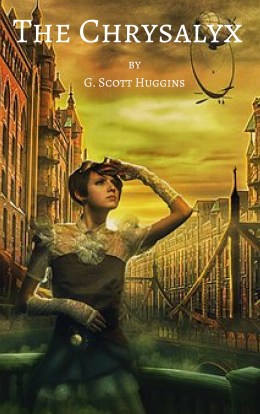
This story will update Monday, Wednesday and Friday on my Patreon until I run out of signs, and is yours for the low price of $1.00 per month. Additionally, you will receive my novelette, The Chrysalyx, a tale of steampunk intrigue in the alternate 1920s, downloadable as a .mobi file.

Chrysalyx Cover Done

So, what’s in the process of happening? Well, what’s coming up is…

  • “All The Colors Of The Darkness,” the story of a girl blinded to keep her from developing her natural talents as a witch, will be appearing sometime this year from Lethe Press in their Survivor anthology.
  • “Crying By Remote Control,” the story of a woman who must use prosthetic emotions, has just been accepted to the anthology Mind Candy 2.
  • On The Wings Of The Morning, an anthology of my no-longer-easily-available work will be coming from Digital Fiction later this year.

Also, the novel I’m working for at Digital Fiction is nearly halfway done.

So that’s it. Please support me on Patreon; I’ll make it worth your while.


The Law Of Diminishing Cool Stuff

One of the great misconceptions that readers (and non-readers) have about writers is that “ideas” are valuable. “Where do you get your ideas” is to a writer, of course, that most useless of questions, much like asking an artist where he gets his canvas or where she gets her clay. It’s just there, and if it’s a mystery to you, then you need to look at the world (and possibly art, whatever your “art” is) a lot more.

So writers are never out of ideas, and in fact generally have the opposite problem. One of my great regrets is that if I were able to become a full-time author right now I could easily write for the rest of my life and never run out of “ideas.” Conservatively, I estimate that there are at least four entire novels and five short stories, apart from the novel I am actually drafting and the one I am revising that I could be working on from the ideas I have now. I will have more.

In fact, the problem I now have come face to face with is in the novel I am revising. It was pointed out to me by my editor that I had been sloppy with my portrayal of black-powder weapons. Well, guilty. I wrote them well enough to fool the average reader (and myself, and at least one other history teacher) but not well enough for this editor’s readers. Guilty as charged.

While I haven’t gone fully into this revision yet (mostly because I’m drafting that other novel, see above) a LOT of ideas — a lot of really COOL ideas — on how to solve this have been flitting around my head. The problem, and the point of this post, is that I have reached the point of what I must call The Law Of Diminishing Cool. In other words, most of the things I can do to make the guns more awesome in ONE direction are completely inconsistent with the ways the gun is already cool in ANOTHER direction. For example, I could reduce the guns’ loading time by making introducing cartridges, or making them breechloaders. But if I do that, I lose a really cool scene featuring a ramrod. Breechloaders don’t NEED ramrods. Or, as it turns out, there really was once a repeating air rifle that saw military service! Lewis and Clark took one with them on their expedition because it didn’t need gunpowder! The Austrian Army was, at about the same time, fully equipped with them! But if I make them do THAT, I lose a really cool scene that relies on the guns having a muzzle flash. Air rifles don’t HAVE muzzle flashes.

There’s no easy way around this, although I am both looking forward to and dreading the thought process I need to solve this problem.  But you can’t just ignore it. Too many famous franchises have ignored this. They can, because people will watch them anyway. But when they do, you get really stupid consequences and lack of continuity, like in Star Wars, where the original series establishes that Force use runs in families, but then the prequels decide that Jedi are essentially Space Monks who can’t have families, but on the other hand, they also want potential Jedi kids to be trained from approximately age 3, and they ALSO want to keep Jedi from falling to the Dark Side.

Now all four of those ideas, taken separately, make some sense. It’s cool to have Jedi abilities run in families, so that Luke must take down Darth Vader. It’s cool that the Jedi are enjoined against attachment, so that Anakin can’t just marry Amidala and live happily ever after. It’s cool that Jedi must be trained from a young age. And it’s sensible that you don’t want Jedi falling to the Dark Side.

Together, these ideas are a mess. If Jedi have to be trained from a young age, wouldn’t it be best if their parents started it, and had a good idea of who they were? And if you DON’T want Jedi to turn to the Dark Side, and the Dark Side is “quicker, easier, more seductive,” wouldn’t you HAVE to train everyone, just to avoid Sith?

The answer to this is that a writer has to practice discipline. As much as you want to, you can’t just do all the ideas at once. That way lies Star Wars. I mean madness. I confuse those these days.

Good Friday Post: The Future Of Faith

This is probably going to be a rambling post, because I have to admit that I haven’t planned it. It just occurred to me that I might want to write something about faith in SF on the day that we Christians remember the death of our Lord.

It is a very common trope, about which I have written before, that atheists and agnostics commonly portray religion as a thing of the past, if they bother to do so at all. And we must not, of course, blame them for so doing. If they honestly believe that faith is no more than superstition, the fanciful fruit of childish minds, and if they also believe that humanity is advancing (toward what, I can’t imagine), then it is reasonable to expect such religions to wither and die, in the fullness of time.

Of course, any thoughtful writer who wishes to portray such a thing would do well to remember the historical fact that religions are possibly the longest-lasting human constructs of all, far outstripping governments, and rivaled only by languages and the family. “Optimistic” atheists have been predicting the end of religion for centuries, just as “optimistic” communists have been predicting the Coming Revolution, and so far both have been as disappointed as Fundamentalist Christians who have, in defiance of our Lord’s command, been predicting His imminent return.

I wish that it were more common in SF especially that casual mentions of faith existed. One of the best examples of that I can think of offhand is the role the Church plays in Niven and Pournelle’s Empire of Man as portrayed on The Mote In God’s Eye. It doesn’t play a huge role in the novel, but MacArthur has a chaplain, a service is held on Sunday, and it’s revealed that the Empire, like many historical kingdoms, is officially Christian, though there doesn’t seem to be any persecution of non-Christians.

Also well done is the Commonwealth Church that Alan Dean Foster came up with. It’s very much not Christian, and welcomes members of all faiths or none, but obviously, if we project faith into the future, it would be just as unrealistic to expect or portray only Christian faith as it would be to portray none at all. What’s saddening is that Foster and Niven/Pournelle’s work seems so alone in this assumption that faith will continue to exist when it seems to be the most reasonable assumption.

I’d be interested in a discussion about what makes this so difficult, but my guess is that since religion is so bound up in emotion, most writers simply don’t want to open themselves to potential attacks.

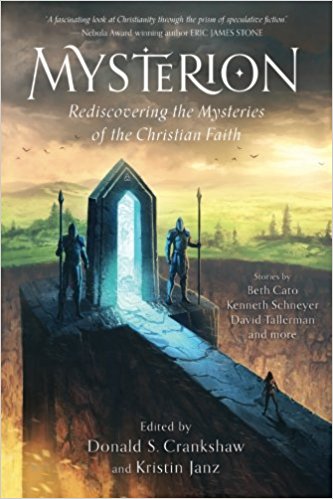
By the way, my story of Christianity in the future, which attracted several wonderful reviews, as well as being in the company of many award-nominated stories, can be found here:

Mysterion

Worlds: Stupid Sci-Fi Film Tricks, The Nuclear Option.

A version of this post appeared earlier on my Patreon site, but I thought it was worth exploring here.

Let me introduce you to one of my pet peeves about SF movies in general, through that awesomely terrible film, Independence Day, a film that apparently existed for the sole purpose of trying to make Will Smith and Bill Pullman as President Lone Starr into badasses, if you kinda squint. Hard.

What was the funniest moment in Independence Day? Was it Will Smith’s “Welcome to Earth,” line? Brent Spiner’s performance as the clueless Area 51 boss? No, I suggest that it was the parts where humanity attempts to fight 15-mile diameter floating city-battleships with air-to-air missiles. It’s kind of a credit to the movie that when the shields go down and the missiles hit the targets that the response from the audience is a cheer rather than, “Wow, the humans scratched the paint.” Which is pretty much the result of the attack. My first warning that this movie was going to be really, really bad was that the United States Air Force was actually sending fighters armed with air-to-air missiles up against these floating cities rather than, say, B-52s ready to carpet-bomb the damned things for a START.

In all seriousness, just from the outset, it should have been clear that even without shields, for fighting these aliens, nuclear weapons should have been the first and only option. The shields were only there so that humanity could use their most powerful weapons too late and discover that they were useless. And of course, once ONE nuclear weapon is proven useless, no one says “Well what if we tried two? Or ten? Because hopefully there does exist an upper threshold for damage that these shields can absorb?”

And of course the reason for that is shown later in the film: because the writer believes that nuclear weapons are infinitely powerful. Just one of them (used on an unshielded target) can destroy an alien spacecraft that is a quarter of the size of the moon.

Which brings me to my point: There are pretty much only two reasons nuclear weapons ever exist in science-fiction:
1) to highlight the awesome technology and power of the aliens in making them useless, (see also George Pal’s War Of The Worlds,) or
2) to provide humanity with a devastating knockout punch at the last second (see Pacific Rim, The Avengers, etc.). Nothing is ever damaged by nuclear weapons: there is only destroyed, or untouched.

Of course, this is ridiculous. Both the United States and the Soviet Union went to rather great lengths in the Cold War to devise shelters that would ensure that their assets could survive near-misses (and in the case of Cheyenne Mountain, direct hits) by nuclear weapons. The best defense against them is also the simplest: dig a deep hole.In addition to this, there are reasons besides political dick-waving that the U.S. and the U.S.S.R. and others invested so much time into building various sizes of nuclear weapons: they really aren’t doomsday devices. But they have been portrayed as doomsday devices for so long that many of my students in U.S. History are shocked and appalled to discover that both Hiroshima and Nagasaki are, today, thriving major world cities, and not smoking wounds in the Earth that glow in the dark. Nuclear weapons have been made to be larger, so as to threaten large cities with full-scale destruction, and smaller, to target massed enemy formations without necessitating the destruction of nearby cities.

Now I hope it’s clear that I’m not saying that nuclear warfare is no big deal: obviously, no sane person wants a nuclear war. On the other hand, does any sane person really want any war at all?

I suspect that there is a sort of reluctance to address these facts, lest people adopt a more casual attitude toward nuclear war, as if saying the truth aloud would somehow encourage people to use the weapons, but given our history, I sincerely doubt that fiction is going to be the tipping point, here, so in the name of halfway decent filmmaking, I suggest we all grow up.

Lost In Space Opera

A Patreon post I just felt like sharing further.

“Sir, I think we’re in a Space Opera.”
“Why is that, Commander?”
“Well, sir, look at the situation. Here we are in our prototype starship that’s supposed to be able to outfight, outfly and outlast anything that’s ever been put in space.”
“Once we’ve got all the experimental systems working properly.”
“Exactly. And we’re the only ship in the quadrant.”
“On the same day that…”
“…the Treacherous Empire is supposed to parade its decommissioned fleet before our entire Starfleet and sign a Treaty of Eternal Peace and Friendship.”
“Oh, hell.”
“Also, the President’s beautiful and inexplicably intelligent twin daughters are aboard for reasons that will never be fully explained, but allegedly have to do with being so darned smart that they’ll be able to help us out with those experimental systems.”
“Well, commander, it looks as though we’ll need to break it to the crew. They deserve to know. Officers only, though: the men’s morale would plummet. They’re all dead men.”
“And women, sir.”
“This is your first Space Opera, isn’t it, Commander?”
“Which of us do you think is the hero?”
“Let’s think about this, Commander. You started this conversation by bringing me an overthought analysis of the situation we find ourselves in, while I have iron-gray hair and a deep, commanding baritone voice. Are you familiar with my service record?”
“Yes, sir. You have a reputation for troubling High Command with your bold command style and refusal to play by the rules.”
“While you are a graduate of the Academy with top honors and do things by the book.”
“I’m… not getting any while I’m on this ship, am I?”
“Only if it’s an enemy agent desperate to worm secrets out of you, son. Or, you know, an alien who turns out to be male or a gender humans don’t even have. For laughs.”
“Dammit.”