Book Recommendation: Orion Shall Rise

Poul Anderson may be the greatest, unknown-outside-of-SF-nal circles author. Why he (and his vivid, poetic prose, and his complex characters) is steadfastly ignored, while writers like Clarke and Asimov are hailed as the giants of the era, I do not know. I have my suspicions, which, in order, are that Anderson enjoyed writing plots full of heroic action, which lit-snobbery denounces as low, that Anderson wrote books full of joy and hope, which lit-snobbery denounces as false, and that Anderson was not sympathetic to Luddism or communism, both of which lit-snobs deem essential to real literature.

However, I stray from the point: One of the greatest post-apocalyptic books ever written is, in my opinion, Orion Shall Rise, which tells the story of people living in the successor states that have arisen after a great nuclear war. The Maurai, the most powerful of these states, embodied by its agent, Terai Wanaroa, are determined to thwart any move toward rebuilding any technology that they deem a threat to the planet, while the Northwest Union, their rival, is embarking on a course that could return the stars to mankind, while also reviving its most dreadful weapons.

The future history is plausible, the characters are beautifully-flawed humans, and the story is heartbreaking with loss and hope. I fully recommend it to everyone, except possibly those who really can’t stand any hint of sexism, because frankly, there is some there, it’s not perfect. But that having been acknowledged, I strongly recommend it as a brilliant and sadly forgotten story.

Trek Is A Dish Best Served Dark

For all its reputation as a forward-looking, optimistic series about the future of humanity, why is it that Star Trek is consistently best when it goes into truly dark places?

In all seriousness, this seems to be an issue: the best of the original Trek movies is generally agreed to have been Star Trek: The Wrath of Khan, which was a bloody revenge story, a recapitulation of Moby Dick in space.

The consistently-chosen fan favorite episode of the Original Series is “The City On The Edge Of Forever,” which affirms that sometimes war is the only way to solve a problem, that addiction to peace at any price is dangerous, and that doing the right thing may involve accepting the death of what you love.

This doesn’t change in the Next Generation, either: “Yesterday’s Enterprise” is the fan favorite there, a trip into an alternate timeline in which the Klingon Empire is slowly destroying the Federation, and the Enterprise-D is destroyed saving the Enterprise-C and the original timeline.*
ETA: An Alert Reader pointed out that I had these backward. And no, I don’t, but I was very unclear. So, to explicate and thus restore my lost nerd-cred: The Enterprise-D, in the War Timeline, sacrifices itself to allow the Enterprise-C to return through the temporal discontinuity so that it (the Enterprise-C) can sacrifice ITSELF to save the original timeline.

Gosh, I wonder why Star Trek didn’t do more time-travel episodes.

None of these stories are without hope, of course, but they are consistently darker than Roddenberry’s vision, and certainly in opposition to his (much-derided) dream for first-season Next Generation of a future in which human interpersonal conflicts had pretty much been transcended.

My own feeling is that Roddenberry’s vision simply took too little account for what people demand in a good story, and far from inspiring people, ended up looking rather insipid, while what the fans wanted were stories in which our heroes laid it all on the line, sacrificing all that they were or wanted in order to save what really mattered. In the end, you cannot “transcend” these things. They are themselves transcendence.

The Politics Of The Future

This may be a dangerous post to write, but what the hell.

The old saying goes that you shouldn’t talk politics or religion on mixed company. Of course, lots of science-fiction deals with politics and religion, but most of the time, they are utopias or dystopias that extol the virtues or expose the dangers of whatever systems the author feels like dealing with. And so the political systems of the future are full of Empires, as in The Mote In God’s Eye, or Star Wars. For democratic socialists we have Star Trek‘s Federation, and for libertarians we have Michael Z. Williamson’s Freehold.

Historically, though, we see that “new” political systems tend to be 1) surprising and 2) not all that new. The two examples in recent history that have achieved success in spreading throughout the world may be worth looking at, here, which are the American-style constitutional republic and the Soviet-style one-party socialist state.

It’s worth remembering that in 1787, there were no functioning large republics or democracies in the world. It was widely believed that such a thing could not work. And yet not only did the American system thrive, its Enlightenment ideals spread through the European states, encouraging their liberalization over the next centuries into functioning republics themselves.

In 1917, the chaos of World War I led to the Soviets seizing control of the Russian Empire. While this system did not thrive in the same way, it certainly spread, and resentment against imperialism and colonialism and the inequalities found in capitalism ensures that it continues to have its supporters despite its disastrous legacy of approximately 100 million directly killed.

Of course, it’s quite possible to argue that neither of these things are precisely “new” forms of government (and that communism isn’t a government, but an economic system, which is both true and stupid, since it’s an economic system that necessitates and advocates a certain style of government), but if that’s the case we might as well go all the way and cite the Iron Law Of Oligarchy: All governments inevitably devolve into oligarchy. But that ends the discussion I’m interested in, which is this:

Is there any room for, and are we capable of imagining, a truly future system of government, one that has never been attempted, or has been attempted only on a very small scale? Honestly, there are only two examples I can think of, one of which has become cliche and the other that’s unclear. In the first, we have Government By Computer. This is almost always a dystopia, as the idea of being ruled by a hypercapable God-machine is rather frightening on its face. The other is Dan Simmons’s hyperdemocratic All Thing in his Hyperion novels, in which there is a fairly direct democracy mediated by the equivalent of the Web. However, this government does elect an Executive that runs humans space, so it’s not really as direct a democracy as all that.

Edited To Add: I can’t believe I forgot to include Ursula LeGuin’s excellent The Dispossessed, which is unique for me in that it a) imagines a form of anarcho-socialism that I actually find semi-plausible, and b) admits to flaws in such a society that significantly hurt the protagonist without being c) dystopian socialism. 

I’d be interested in hearing people’s thoughts on this, as well as being directed to any works that explore this that I’m not conscious of.
Babylon 5: The Grand Vision

I find myself today remembering one of my formative influences as a young writer, and that is Babylon 5, which I think will always be one of my great favorite television series.

Babylon 5 was groundbreaking in so many ways, and I could write all day about them, but I don’t have that kind of time, so I’m just going to mention a few of them.

Babylon 5 was the first science-fiction series that attempted the grand story arc, getting through not one, but two huge, if related, plotlines: The Shadow War and the Earth Alliance Civil War. The only show I can think of that even attempted this previously was Battlestar Galactica, but there never seemed to be any real progress in the Galactica’s quest for Earth.

Babylon 5 took chances with its characters, portraying people who began as little people in their assigned positions growing plausibly into great men and women. We saw John Sheridan become head of state. We saw G’Kar and Delenn become prophets. We saw Londo become a monstrous dictator and war criminal, and then take the long, backsliding road to redemption. In this I feel that it was superior to its contemporary, Star Trek, because the hallmark of Star Trek was that the characters never changed. Change, such as Kirk’s promotion to Admiral, or Riker’s captaincy, was seen as a bad thing.

Babylon 5 portrayed a universe larger than could be imagined, like Star Trek before it, but in my opinion, did a better job than Star Trek, because while Star Trek kept us centered on the Enterprise, so that the uncommon became commonplace, Babylon 5 brought the impact of that larger universe home to all those involved. There was no safe place to hide from the Shadows and the Vorlons, and everything was riding on the line for the characters.

I would dearly love to see Babylon 5 re-imagined, or perhaps rebooted, but I am not sure that such a cast or such a vision could ever be reassembled. It saddens me, though, that somehow Babylon 5 has not received the accolades that I feel it earned.

How To Change Stories So They Sell: An Experience

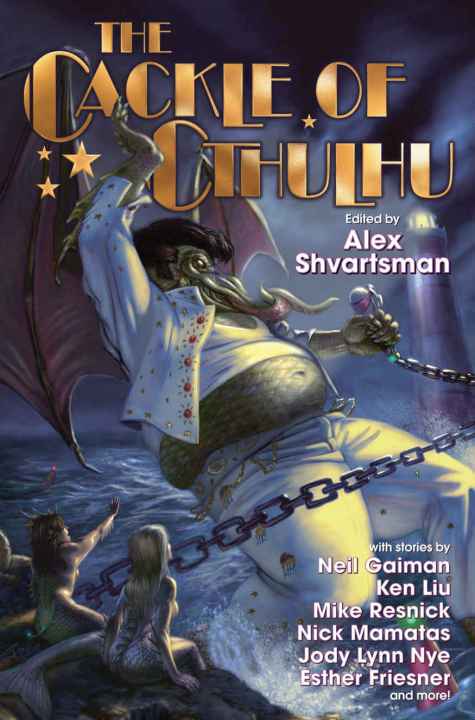
One of the things that continually irritates new writers (which I still count as including myself) is not being able to tell what an editor or publisher wants. Often, it is impossible to tell what a given editor wants, but if you’re talking to someone with a presence, it really does help to read what they have published, and consider taking a chance. Often, more than one chance. So I’ll share my story of selling “In The Employee Manual Of Madness” to Alex Shvartsman and Baen Books for the anthology The Cackle Of Cthulhu.

Before trying to submit to this anthology, I’d already sold a reprint to Alex for his Funny Fantasy Anthology. He bought “Giantkiller” but passed on “Phoenix For The Amateur Chef” and a James and Harriet story. He didn’t say why, either, just that they “weren’t for him.” You get a lot of that, for reasons you will never really know. For an excellent and more in-depth take on this than I can provide, read Monalisa Morgan Foster’s series, Rejection Is An Opinion, Not A Death Sentence.

Now, the anthology was a call for submissions for funny Cthulhu stories. I’d already sold at least two dead serious Cthulhu stories by this time, and was interested in trying a send-up, and the antho was offering pro rates. But I also knew that Alex was more likely to reject traditionally-structured stories, from me at least. I’d seen him publish stories structured like Twitter-streams and bio-excerpts. So to catch his notice, I decided I would have to take a chance.  I wrote: “On the Menu Stains Of Madness,” A Lovecraftian Choose Your Own Adventure Story. It was rejected. He didn’t like the format.

In the past, I’d have given up at that point, but I’d learned a valuable lesson: No Rule Says You Can Only Tell A Story One Way. From this, there is a corollary: No Rule Says You Can’t Sell The Same Story Told Two Ways If People Will Buy It. Honestly, I feel dumb for not realizing this earlier: How many stories did Larry Niven write about murderers who tried to use teleporter booths to get away with it? And how many did he write about paranoid-schizophrenic murderers who forgot to take their pills? Did people buy them anyway? Yes they did.

So I wrote “In the Employee Manual Of Madness,” which was in many ways the same story: worker is trapped in a restaurant under the sway of a Cthulhu-worshiping cult. Only this one was not really a “story” but rather a manual of expected behavior. And that one sold.

So remember, know your audience and don’t give up.

And buy my story: it’s hilarious.

Cackle Of Cthulhu

Outlining: The Second Level

So in my last post, I discussed the importance of outlining. Again, if you can write novels that you’re happy with without outlining, then you don’t need to read this post. But I couldn’t.

So, using the outlining I described, I wrote about three and a half novels, including the horrible first trunk novel. But I still struggled with each individual chapter, After all, a chapter of a novel is about as much work to write (although it is a whole different kind of work) as a short story. And I kept finding that once I got down to chapter-level writing, I hadn’t outlined as much as I thought I had. I had to make decisions about how the characters made decisions on the fly, and sometimes these would have far-reaching implications for the whole flow of the novel. I’d have to stop the flow of my prose to re-plot (or sometimes, plot for the first time) crucial events. For example, in my last completed novel, I had a scene where I needed characters on an airship to chase down characters on an ocean vessel. The problem was, while you certainly can (and people have) docked airships to ocean ships, you can’t do it without an actual platform for that purpose. So I had to go back and write a backstory that explained why the ocean ship on question had that capability in the first place.

What I figured out, halfway through, was this: you can outline chapters as easily as you can outline full novels, and it’s helpful for the same reason that outlining the whole novel is. You can scribble down dialogue flows, rearrange the order in which things happen, and see quickly if you’re doing anything that violates later continuity, without having had to pound out pages of text. Then, when you ARE in the flow of producing text, you don’t have to stop and solve problems.

Using this technique, the last half of my novel just flowed like water. And for the first time, I discovered that writing a novel did not feel like a terrible, endless slog. That doesn’t mean that there were zero problems, and frankly, the fact that I’d finished three previous novels doubtless had its effect as well. But it was like turning out of a headwind that’s always been there, and I wished I’d figured out this bi-level outlining technique sooner. And so I offer this advice for what it’s worth, because I wish I hadn’t had to figure it out for myself.

I have wondered why novelists don’t talk about this more. I don’t see them doing it, anyway. There are several possibilities. First and most likely, other novelists know just how individual novel-writing is, and they don’t think their experience will be helpful. Secondly, they may have internalized it to the point they don’t think about it anymore. Finally, I may just not have been reading in the right places. But I hope my readers will find my effort here helpful.

Outlining

So, why outlining? First, a caveat:

One of the most valuable pieces of writing I ever got was at Clarion, from my two instructors, Karen Joy Fowler and Tim Powers. They essentially said that the only right way to write a novel was the one that produced a novel. That didn’t seem very helpful at the time, when I had written only one really bad novel.
But the point I eventually figured out, was that they were saying that novels could be written using any method if you stuck to it. Karen was a pantser. She started writing and just kept going until she had a novel. Tim was a compulsive researcher and outliner.

But what I really wanted, back then, was for someone to tell me what had worked for them so I could try it out and see if it worked for me.

See, the problem I kept having while I was writing even short stories was that I would get so many ideas of where to go next that I would not be able to hold them all in my head, and this led to frustration and time-wasting while I desperately tried to remember what I was supposed to be writing now, as opposed to ten pages from now. So here were the benefits of outlining for me:

Remembering The Ideas I Had: I can’t tell you how many times I would get to the end of a scene I was intensely into and then just… stop. Where was I going with this? I had a plan. I had the plan just an hour ago. But what was it? It was gone. It was so good and I was sure I would never forget it. But I did.
If you’re not the kind of person this ever happens to, then I’m sure this is laughable. That’s okay: you have one less reason to become an outliner. But I don’t believe I’m the only one it happens to.
The outline ensures that I can simply look at it and say, “Ah, yes, that’s where I was going.”

Revealing Contradictory Ideas: In the heat of evolving the story, it’s very easy to come up with MANY cool ways to tell it.  Oooh! What if the aliens are super-fast carnivores and our heroine has to lay a trap for one. Oooh! What if the aliens are natural hunters and she leads them on a long chase around the island, and..?
See, there’s nothing wrong with those ideas. Either will work. But they can’t BOTH work. A fast carnivore will, by definition, run our heroine down very quickly.
The outline doesn’t stop me from having to make these choices, obviously. But it does reveal the contradictions quickly, and avoid having to throw out pages of prose because I wrote myself into a corner.

Being Able To See The Pattern-Flow Of The Whole Story: This is probably the biggest benefit for me, though it’s kind of a combination of the first two advantages. Scribbling out and refining an outline is great for getting the whole thing down and being able to quickly spot where you have contradictions, or long stretches of nothing, or events that don’t logically follow from one another. It allows you to fix those things before you’ve written, say, 50 pages of prose, 40 of which are now crap.

So, if you’ve found this useful, you now have an outline.

Now you’re ready to outline!

I’ll explain what I mean by that tomorrow.

How To Start Your Novel

Or, more truthfully, how to start MY novel, but who knows, it may work for you.

I actually had trouble starting this novel. It took me awhile to figure out why. And the answer is that even though it’s my fifth novel, I’ve never just started a novel, with the intent to write a novel, absolutely cold with a clear idea of where I wanted to go with it.

Of my previous four novels, The Morning Of The Dragon (a college trunk book that will never see the light of day) started as a short story, as did Across The Endless Ocean. That one actually started life as three short stories, two of which I sold before I figured out where it was going as a novel.

A Calling In Darkness started out as a novel, but I pantsed the first three or four chapters before I had a clue as to where it would end up. Beneath the Verdant Tide was the closest I came to starting a novel with an intentional end, but the vision of that end was (and the ultimate end still is) vague enough that it hasn’t risen to the level of outline.

This novel, which has the inauspicious working title of Project Moon 2099, was commissioned by the publisher, leaving me in the position of actually outlining the whole thing before really starting to write. That gave me a short-term goal, which was useful, but made starting the thing paradoxically harder because this time I could see every bloody mile of the path I was about to start on. And that was surprisingly difficult to start.

Now, why start with an outline in the first place? That, my friends, is a subject for another post.


Patreon Report: What I Am Learning

Well, due to a few highly dedicated fans, I’m going to call my Patreon launch a success in the past 24 hours. Yes, right now I have only 3 patrons, but there are much better-known authors than me who have only about a dozen after months, so I’m not worried. So what HAVE I learned in this process that I could pass along to anyone else?

Have Your Rewards In Place: I was not expecting to have to fulfill high-level rewards so soon (if ever) and was really taken aback by having to fulfill them immediately. Be ready for success.

Editing Is Hard: I placed a Kindle self-pubbed novelette in place for my rewards. Despite having read it over several times, and having had other people read it, I still noticed errors within 24 hours and had to reupload the book.

Book Covers Are Not As Hard As I Thought: It took surprisingly little time to find an appropriate book cover app for no money. I recommend Calibre for converting to Kindle, Canva for cover creation and Pixabay for images, but there may be better resources (if you’re aware of one, let me know!)

Of course, there are a number of things I still wish I knew. Productive advertising remains very difficult. Facebook’s advertising has not seemed profitable to me in the past. Word-of-mouth (or perhaps word-of-share) is the best, but hard to generate even from good fans. I will continue posting about this as I learn more.

Patreon Launch!! With Bonus Novelette!!

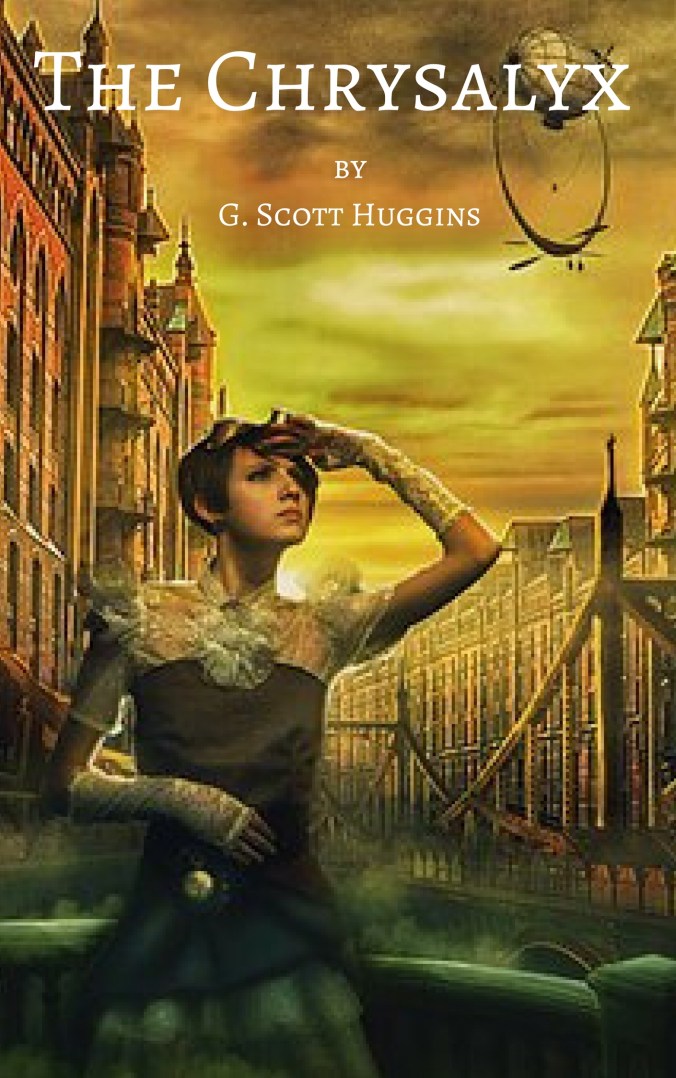
This is one of the major reasons for the hiatus of last week. I was preparing to launch my latest venue. If you are up for supporting me for $1 on Patreon, you get first crack at my steampunk alternate-history novelette, “The Chrysalyx” in .mobi (Kindle) format. This novelette will revert to the Secret Story Vault ($30 tier) in April.

In a world where dreams can shape flesh, and the British and German Empires maintain an uneasy peace with the Confederate States, Special Agent Aemelia Stapledon and Jupiter Breckenridge of the President’s Guard must discover the limits of the transhuman and their own capabilities if they are to stop a plot to re-image humanity into its darkest nightmares. Their hunt will lead them to the highest levels of power, and to the unfathomed depths of The Chrysalyx.