Release Day: Iron Out Of Vulcan!

Today, my story “Iron Out Of Vulcan” releases in the anthology Battling In All Her Finery from Mad Scientist Journal! Accompanied by twenty other tales of awesome warrior women (and who doesn’t like those), it is a tale of post-alien conquest apocalyptic survival. Short version, of you liked Furiosa, you’ll love Scout.

And just for your enjoyment: an excerpt:
I rode between two drum-fed National Guard .50 caliber machine guns mounted in a plexiglass ball-turret, mounted on the back of a microbus shell welded over the bed of the six-wheel Ford F550. Again, I peered through the iron crosshairs at the black speck in the distance.

Definitely a motorcycle.

“We have a friend,” I called through to the cabin. “Watch for IEDs.”

“Oh, sure; I’m on it,” Mina deadpanned. But she signed to Eric, which was good enough. Paul moved forward, too. It was a standard trick. Make your target watch you, and they might miss your roadside bombs. Best way to take us out, unless they had spike-strips.

“Who is it, Scout?” asked Mina. “Not Them, I take it?”

“She’d be swearing more,” Eric grunted.

“I don’t know,” I said. Not Them. A gang out of Chicago or Dallas, maybe. The remnant of a Mexican drug cartel, perhaps. The bandidos had tried taking Criptown from us last summer. Cost us a lot of good Crips and ammo we couldn’t spare.

Some thought we shouldn’t call the place ‘Criptown.’ Worried it might scare potential recruits off because of the old gang name. As if any of them had got out of the cities before the nukes hit.

I looked back at the cycle. We could only hope that cycle-boy’s friends would decide Vulcans weren’t worth the carnage.

I looked at the empty road ahead. Somewhere out there, a radio had called for us. Was it a trap? Some Vulcans had disappeared. Maybe this cyclist’s friends had set us up. Or maybe someone else had. Or maybe – just maybe – the signal was genuine. It was a chance we would have to take, if we could find them.

We needed people desperate enough to live free.
Return To Amazing Stories!

I just realized that I never followed up on the post from June about my story about Space Marine Midwives (In Space).

It has been sold to Amazing Stories, and will appear in the next issue releasing mid-November. I was in the second-to-last issue of Amazing Stories when it folded in 2000, so I find the symmetry especially pleasing to find myself in the second issue of its next incarnation.

The story that will appear is called “In The Republic Of The Blind,” and is a twist on H.G. Wells’s better-known work set on a long-forgotten colony where the formerly disabled preserve their own cultures.

You Can Always Get What You Want… But First You Have To Figure Out What You Need. OR: Yes, You Can Have Your Space Fighters Dogfighting In Space.

One of the things that truly sucks about Fans of Anything is that they all have their ideas about what constitutes “Anything.” It’s not a soluble problem: without passion, you don’t have fans at all, and with passionate love of what they like comes equally passionate hatred for what they don’t like.

Science-fiction fans, especially the book-reading ones (yes, there are non-book reading ones… sort of… shudder) really love to bag on movies for getting space combat “wrong.” Just to take some examples not at random: 1) you would not be able to see beam weapons in space. 2) Human reflexes would be almost useless in space combat because computers would fight so much faster. 3) Weapons would strike from so far away that enemy ships would be invisible to the eye, and 4) Therefore dogfighting starfighters are stupid.

And let’s admit one thing right off. If you’re writing super-hard SF, and restricting yourself to tech we can build today or are planning to build tomorrow (see Niven and Pournelle’s Footfall for an epic space-battle scene of that type) then you’re pretty much right on all counts.

But the problem is that the same things are said of works that utilize gravity drives, hyperspace, force shields and any number of other things that move the fiction completely into the Space Opera subgenre. To which I reply: are you KIDDING me?

Look, folks, you can’t have hard science-fiction and space opera at the same time. You can sure as hell enjoy both: I do. But if you’re going to complain about spacecraft maneuvering like airplanes and ships hitting each other from visible ranges, then let’s be honest and complain about EVERYTHING. Let’s have no warp drives, no magic shields, no acceleration compensator fields, no antigravs, nothing.

And for cripes’ sake let’s not pretend that space opera is worse LITERATURE. One of the finest works of SF Literature in history is Dune. The novel that decided that guns would be obsolete because of personal body shields that would bring back a form of feudalism, and as a side note wiped out computers because of a religious war. Or we could look at The Left Hand Of Darkness that posits a branch of humanity that have evolved a sexual mechanism that hasn’t been seen in any known species more advanced than… what? Frogs?

No, if you want to make your Space Opera work, then make it work. Just don’t be stupid about it. I can outline a way to make manual starfighter combat plausible right now. It involves a lot of handwavium, but it’s not hard.

Imagine for a moment that humanity has developed the (what could I call it?) the Yamamoto Field. The Field’s generator can be carried by a fighter-sized craft. The Field has the following qualities:

1) It’s impenetrable to E-M radiation except for visible light. Any other form of radiation is absorbed or passes through is refracted around it. Its radius when activated is at least a half-mile.

2) The Field also prevents computers and other delicate electronics from functioning inside it. It scrambles their circuits. Only simple mechanical calculation devices can aid the human pilots.

3) The Field deflects incoming objects directly proportional to their velocity and inversely proportional to their mass.

So, now I have a Field that’s going to protect our fighters from targeting computers, guided missiles, and high-velocity mass-drivers. It provides no protection from lasers, but you’re going to have to fire those pretty much with the Mark I Eyeball assisted with passive lenses. Since the Field can also be mounted on capital ships, they will have much the same problems. Granted, nuclear weapons might be brought in to solve those problems, but larger Fields might nullify that threat.

Now, it’s possible that I overlooked something in the design of the Yamamoto Field. It’s possible that one of my commenters will gleefully point it out to me. But I trust the point is made: a piece of tech COULD be plausibly designed to bring back WWII Fighters In Space. You might not like that story. You might not want to read that story. Which is fine; there are poor lost souls out there who don’t like Dune.

But it doesn’t mean it can’t be a good story.


Science Fiction Pet Peeve: Really Bad Naval Architecture.

Okay, it’s time to discuss one of my favorite topics: Pet Peeves Of Science-Fiction. In this edition, we’ll discuss really awful naval architecture.
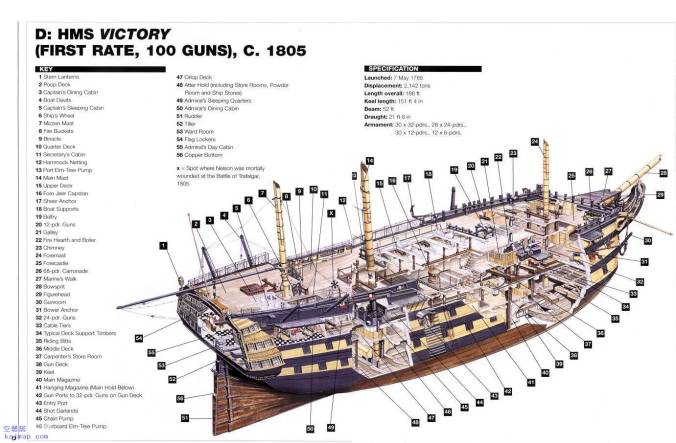
Naval architecture is, of course, the science and art of designing warships. Now, for most of history, warships were really just floating fighting platforms that rammed into each other, after which the soldiers aboard tried to kill one another in various awful ways. With the advent of guns, people had to decide where to put them, and the physics of sailing pretty much meant that the guns, which were very small compared to the ship, had to be placed in broadsides, like so:
Related image

However, with the advent of better steel and larger guns, cannon could be built that were a significant fraction of the ship’s width, and launch shells that would gain a lot from being able to elevate the guns significantly. Additionally, these guns were too heavy to permit the ship to carry twice as many of them that would be permanently pointed away from the ship. With the simultaneous elimination of sail, that meant that guns could and should be placed in turrets with about 270 degrees of action, thus:

Image result for uss new jersey deck plans

Of course, 360 degrees of action would have been better, but you have to have a place for the bridge, the smokestacks, and of course, the OTHER GUNS to be, safely.

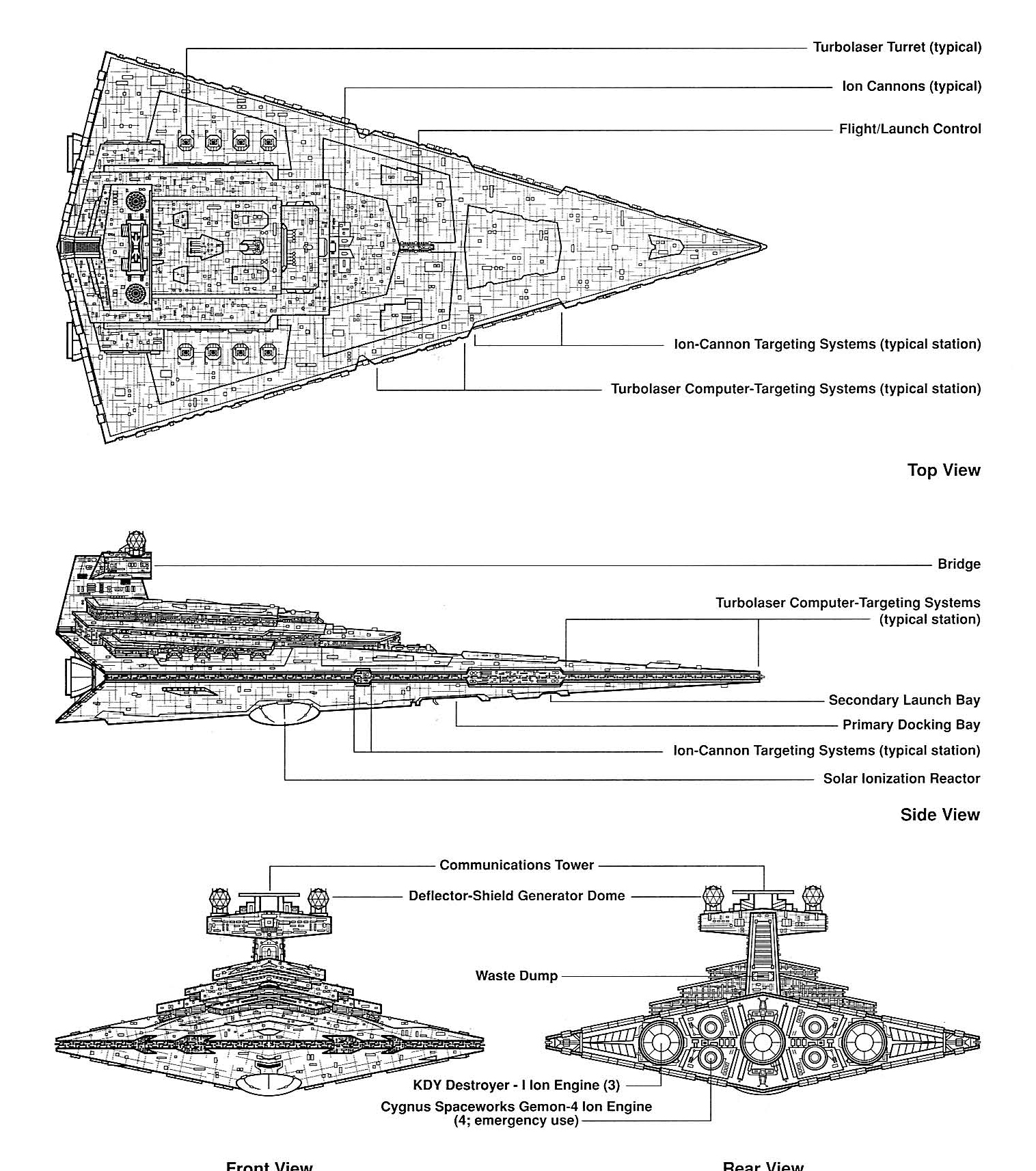
Okay, so that’s basic fields of fire as influenced by technology. Okay, ready? THIS is an Imperial Star Destroyer:

Related image

Take a good look at the turbolaser batteries. They are arranged in broadsides, and they are tiny compared to the ship, and most ridiculously, they are in turrets.

Now, the fact that they are tiny is not a problem. We know from Star Wars canon (no pun intended) that these are very powerful ships. It may be that Star Wars ships HAVE to be that much bigger than the weapons they carry simply to power them, and that most of that mass IS power generation.

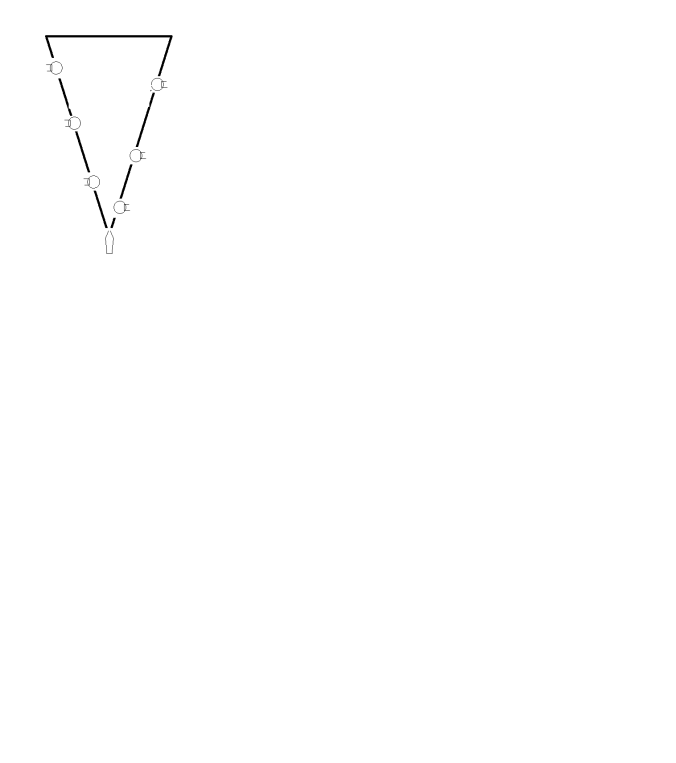
But they are arranged in broadsides, and only half of them can fire at a given moment because of the superstructure. Which begs the question: was there any reason these guns couldn’t have been put on the BOTTOM of the ship? They can’t even fire forward or aft except at half-strength, because the guns block each other. For a simplified version, they look like this (please forgive the ridiculously poor computer drawing skills):

ISD 1

Now in space, there’s no excuse for this., especially when we know that the Star Wars universe has the technology to make very fast and maneuverable turrets. The only way this makes sense at all is if a Star Destroyer can roll and pitch so fast that turrets don;t really matter at all, and we know from the events of pretty much all Star Wars movies that this is not the case.

A far superior design would be this:

ISD 2.png

From this design, we can immediately see that I don’t know how to manipulate images very well, but we can ALSO see (and this is my point) that with larger, globular turrets that could clear the entire hull, a Star Destroyer design could easily have been imagined that would have allowed all turrets to bear on targets both above and below and (assuming, again, large turrets and a FLAT hull), to fore and aft, and even to both sides simultaneously by offsetting them as pictured. The bridge (assuming it could not have been buried deep in the hull, which is where it always SHOULD have been) could be moved up front.

Why isn’t this done? Well, I suspect that for one thing, people tend to find asymmetry ugly, even when it is practical. And for another, Lucas seems to have really liked the idea of big ships with tiny guns, possibly to justify his overreliance on space fighters (about which more another time). But it just annoys me when people build ships that, for no apparent reason, have huge unnecessary blind spots. When we build the ships of the future, they should at least be well-built.


How Not To Worldbuild: Ep. I, The Phantom Mess.

So, I realize it’s a little late to bash on Star Wars, Ep. I, The Phantom Menace, but I have a good excuse; I have three children. So upon discovering that the prequels existed, which they did by the subtle and clever ability of knowing how to count things in a sequence, they asked me if I would please, please PLEASE check out the prequels from the library so they could watch it despite my wife’s and my strong moral position of not having such filth in our house.

These are the struggles facing those of us who dare to parent responsibly and with discipline.

But yes, I caved.

And I am proud that one of the first questions my son asked was pretty much: “So what’s a blockade, and how come the Trade Federation can just do that?”

Which of course, was one of the questions that Lucas should have asked himself before penning this godsawful mess. See, in the opening crawl, we are told that the whole mess with Naboo stemmed from the taxation of “outlying trade routes” being “in dispute.” Which led to the Trade Federation imposing a supposedly “perfectly legal” blockade of Naboo because…

Because why? Because it was Freak-Out Friday? We know that Naboo and the Trade Federation are both member states of this Galactic Republic. I mean, ignoring the fact that a blockade is pretty much always an act of war, and ignoring the fact that I can’t even THINK of a historical precedent for a polity that would legally allow one member state to straight-up blockade another member state, what possible advantage does this confer to the Trade Federation? Senator Palpatine later says that the “taxation” of the trade routes issue began in the Galactic Senate, but never says who was taxing what, or why, or how the Trade Federation blockading Naboo makes sense as a retaliatory measure.

As a side note, I think the only thing that makes remote sense is that somehow, Naboo refused to pay the taxes, and the Trade Federation retaliated with a blockade. And when Chancellor Velorum sent the Jedi to negotiate, Sidious ordered their deaths and the subsequent invasion of Naboo to prolong the crisis. Of course, this is pretty funny when you realize that the whole thing relies on the Senate being just fine with ignoring the invasion of Naboo, AND YET ready to remove the Chancellor for IGNORING the invasion of Naboo, AND THEN replacing him with the Senator from Naboo, who will not ignore the invasion of Naboo.

Now, I suppose one can always say that that’s a hell of a lot of backstory that’s not very interesting, but that ignores the fact that the original Star Wars painted a completely logical picture of the Imperial Government with just a few sentences in passing:

“Holding her is dangerous. If word leaks out, it could generate sympathy for the Rebellion in the Senate.”

“Send a distress signal. Then inform the Senate that all aboard were killed.”

And later…

“The Imperial Senate will no longer be of any concern to us. I’ve just received word that the Emperor has dissolved the council permanently. The last remnants of the Old Republic have been swept away.”

“That’s impossible! How will the Emperor maintain control without the bureaucracy?”

“The regional governors will now have direct control… fear will keep the local systems in line. Fear of this battle station.”

In five sentences, we have a complete and coherent picture: The Emperor is consolidating control over the relatively-new Galactic Empire, and using the equivalent of nuclear weapons to do it. He and Vader are keeping the inflammatory arrest of a Senator for treason quiet until the Emperor can dissolve the Senate, and the Death Star is ready to back the power play. All of this is reasonable, and it takes maybe three minutes of dialogue. That’s excellent worldbuilding.

Twenty years later, in its place, we have far more dialogue that gets us exactly nowhere. It’s like he just didn’t care.

Where Stories Come From: When The Fleet Comes

I think it’s safe to say that the most popular story I’ve written is “When The Fleet Comes” (which you can buy at the link to the right for only $1.00). It was for months the best-selling short story for Digital Fiction Corporation, and for all I know, still is.

“Where do you get your ideas” is a classic question to writers that has become a cliche, and most of us respond with something like “where don’t you get ideas,” because seriously, they’re everywhere. Contrary to many assumptions, writers never run out of ideas. They just run out of ways to execute them properly, which is a lot harder. But this one, I remember.

So many of my ideas for writing stories seem to come from me being tired of reading the same old plots again. The core of the story — that the Earth is destroyed — is a very old one, going back arguably to religious prophecy. But those stories always seem to end in one of two ways: humanity escapes to a new world and/or achieves revenge on its destroyers, and starting anew as masters of their own fates (When Worlds Collide, Titan, A.E.) or it’s entirely a memento mori tale (On The Beach, I Am Legend).

And yet history is replete with the stories of people whose tribes were almost wiped out, leaving them with no home to go to, no new frontier within their reach. The Native Americans, the Tibetans, the South Vietnamese, and too many others to count were left with the choice to live under an alien dictatorship, or to flee into exile and live with aliens. And they had to go on, and build new lives in cultures that would never be theirs, and preserve parts of themselves to pass on to their children, knowing that it would never be more than parts.

There was no one moment that inspired me to write the story. I just wondered how people from my own heritage might deal with the loss of their entire social and cultural framework. And so I considered Sean, the orphan adopted into alien culture, never really considering “his” people to be his. And I considered Amanda and her father, George, trying to, in their own way, continue the human race on an alien world, and finding their own, flawed answers to the question, what is important? What do we remember? What do we do to survive? What makes us… us? They do it by turning inward, but also by accepting a grim necessity. And I also considered Sean’s alien wife, Ajna, and her well-meaning naivete that hurts him, but nevertheless holds a degree of insight into his pain.

In any case, it seems to have spoken to more people than anything else I’ve ever written, and I think this is one of the things I really value in the SF I choose to read: the challenging of the dichotomies that are so often presented. The cry, “Victory or Death” echoes down through the ages and is a popular theme, but what happens when the first is out of your reach and the second seems unthinkable? If you are one of those who read the story and enjoyed it, I can only say, thank you for showing me that I am not alone in considering these things.

The “Importance” Of Originality In One Easy Lesson.

I just sold a story about Space Marine Midwives with Disabilities to a pro market magazine (announcement of which one when contract is signed).

This should teach us two things about “originality.”

  1. No idea is so completely bizarre that it should be cast aside as unworthy  of being published.
  2. Since the GENESIS of this story was actually a Call For Submissions (for an anthology that as far as I know, never even opened to submissions. Yeah, um, really should have gone on to that if you wanted this story, guys) that SPECIFIED “Space Marine Midwives,” there is no idea so completely bizarre AND original that no one has thought of it already.

In other words, “Originality” doesn’t matter a DAMN as long as it’s good writing and doesn’t FEEL like a retread.

The rest is up to you.

As You Know, Bob, You’re In A Hard Science-Fiction Novel.

“I am? I’m in a hard science-fiction novel? How do you know that?”

“Well, Bob, look at it this way. What do you do?”

“I’m a scientist.”

“And what sort of scientist are you?”

“Well, I’m a nuclear physicist.”

“Right. And do you have any mad and overly-complicated schemes to take over the world?”

“Um. No?”

“How about make tons of money by dumping nuclear waste illegally all over women and children in some underdeveloped nation?”

“What? NO! Why would anyone DO that? Thorium reactors don’t even…”

“Please, Bob. We’ll let you have your exposition later. That’s how you know you’re in a Hard SF novel. In any other setting, a nuclear physicist would by definition be the villain. And who are all your co-workers here on this ship?”

“Well, there’s Dave the astronomer, and Karen the biogeneticist, and Shu-Ling the botanist, and Raymundo the geologist.”

“Okay, so two things to notice. First of all, everyone on this ship is a scientist, right?”

“Well… yeah.”

“So, no one is here just to pilot the ship?”

“Dave does that.”

“Or fix the ship?”

“Raymundo in an expert mech…”

“Or cook meals?”

“Karen is a professional chef at…”

“Okay, now you’re just embarrassing us all. Not only are the women all in the life sciences, one of them is actually your cook?”

“She’s a professional chef. That makes it not sexist.”

“Of course it does. And she, not to mention all of you, can have completely different full-time careers as well as being world-class, practically-Nobel laureates because scientists are just that smart, right?”

“Well… yeah? But I don’t do any of that stuff!”

“And what do you do for fun?”

“I play the violin.”

“And you did what with that back on Earth?”

“I was the concertmaster for the Boston Orchestra.”

“Of course you were. Why scientists should probably be running the planet Earth rather than running around in spaceships.”

“Well, we’re saving the planet from climate change and overpopulation and corporate greed actually, but I think your suggestion has merit…”

“I am just shocked to hear that. Bob, Karen had a question about nuclear physics she asked me to pass along: How much radiation should we expect to take traveling near the corona of that M-class star we’re approaching?”

“Well, that depends very much whether we’re talking about alpha, beta, or gamma radiation. As you know, alpha radiation consists of the nuclei of helium atoms, about which the electrons orbit…”

“Why are you answering the question of a double Ph.D as if she’s a high-school student? And using the Bohr model, which hasn’t been current for like fifty years?”

“Um, because… well, um…”

“Is it because your readers’ last contact with nuclear physics was in their junior year of high school? In Mr. Kramer’s class? That he went over once? For thirty minutes? While they were asleep?”

“Dammit.”

Notes To The Author As A Young Man: How You Can Write A Novel In Three And A Half Months, And Still Have A Life (Part 2)

A continuation of yesterday’s post.

Write Every Day (L): I cannot overstate the importance of writing on your novel every day. It builds a momentum up that is easy to sustain, much like running down a shallow grade. Gravity helps you. But if you stop, you have to overcome your inertia again and it’s a lot harder.

Don’t Give Up When You Fail To Write Every Day (L): You will fail to write every day. At some point, something is going to come up that will (more accurately, “that you will allow to”) keep you from writing. There will be something with the kids, or your wife, or your job, where you will come home and say “I just can’t.”
And the worst thing in the world you can do is throw up your hands and say, “Well, I failed. I guess I don’t have what it takes” and pitch a fit about it. Get back to work the next day and go on. Make up for the lost day if you can. If you can’t, oh well, you lost a day. Keep going.

Do Not Agonize Over Shit You Will Fix Anyway In The Revision (L): This may be the most important piece of advice that I implemented, having learned it from Steven Barnes. And I resisted it for a long time. My reasoning was, “If I know what to fix now, I should fix it. I’m going to have to fix it anyway, and this way I won’t have to revise as much.”
Well, as I have said to my own students before, “That is very compelling and sensible reasoning, which is nevertheless wrong.” Okay, but why is it wrong?
It’s wrong for four main reasons:
1) The process of going back and revising kills your momentum. Part of what encourages you to keep going is seeing how much you’ve done. It’s a reward that your animal brain really gets off on. So the faster you go, the faster you go. If you kill that momentum, you slow down HARD. And unlike the tortoise, slow and steady really does not win this race, because…
2) What you’re really doing is replacing errors that you can see with ones you can’t. They’re going to creep in there anyway, and they’ll be harder to see when you DO go back and reread the manuscript. I always thought that it made more sense to fix the errors NOW than to go back later because if I didn’t, I’d be building later chapters on earlier crap, and it would all have to be fixed. There’s some truth to this* but what I didn’t realize is that it cuts both ways.  You can also come up with a solution near the end of the book that fixes things you screwed up earlier, only because you “fixed” it earlier, that new solution doesn’t work and you have to go back and fix your fix. Which is now HARDER because…
3) When you go back and revise, you will, if you’re any good, produce tighter, neater prose. That’s a good thing. But having to revise that is harder, because its so well done. So essentially, you end up throwing out TWO drafts and writing two more to replace finished prose with finished prose, rather than throwing out ONE draft and writing two more.
4) Finally, going back and revising isn’t fun, so you try to avoid it, and this means you have to fight the urge to agonize over everything. What is this character’s name? What is the name of this gadget? What is the name of this country? How exactly does the gadget work. I need to research to see if that’s plausible. And you’re stuck in a mire of Getting Everything Right The First Time. Right now my manuscript is filled with people named [NAME], and notes like [LET’S GO BACK AND MAKE JEREMY’S PARENTS HAVE A RUN-IN WITH HIS MOM] or [I’D KIND OF LIKE JAEL TO DO SOME SORT OF THEATRICAL TRICK HERE TO DEMONSTRATE FALLING IN LOW GRAVITY, BUT I DON’T WANT TO WORK OUT THE MATH RIGHT NOW.]

So that’s how I did it. Obviously ALL these techniques may not work for YOU, the reader (especially the outlining), but this is the advice I wish I could have read and understood twenty years ago. I hope it helps.

By the way, if you’re interested in more from Steven Barnes, who knows a LOT more about all this than I do, you can find the Lifewriting group here.

*There are some cases where you really want to go back and revise right then, but they’re really on the order of making a huge change to your basics. Like, “I want this character to be a 78 year old man rather than a 16 year old girl,” or “I think we should set this on Enceladus rather than on the Titanic.” Anything less than THAT, leave for revision.